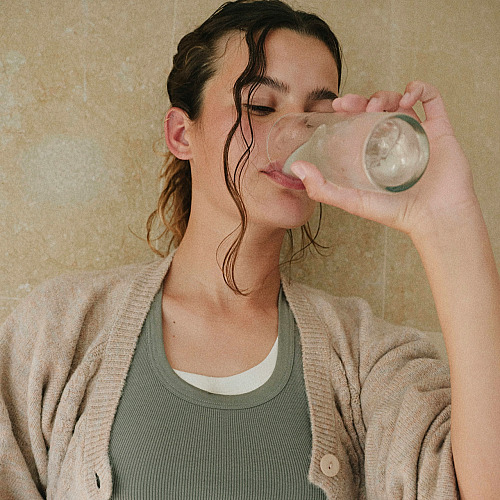
As a nurse, I see the consequences of dehydration daily. So when my mom works in the garden for hours without touching her water bottle or my sister powers through mornings on willpower alone, part of me worries. Both say they drink when they’re thirsty, but the constant cultural messaging about hydration makes me second-guess whether that’s enough.
Over the years, I’ve gently encouraged better hydration habits with water bottles that have time markers and reminders about staying hydrated, just the usual concerned-family-member toolkit. Recently, though, I’ve been digging into the research on hydration, and the findings are more nuanced than the conventional wisdom suggests.
The Eight-Glass Myth Falls Apart
The widely repeated “eight 8-ounce glasses of water per day” recommendation turns out to lack scientific backing. A comprehensive 2002 review found no scientific studies supporting this specific target.
The origin of this persistent advice dates back to 1945, when the Food and Nutrition Board suggested people need about 2.5 liters of water daily. What happened next is a classic game of telephone. The original guidance included an important caveat that’s been largely forgotten: Much of that water comes from the food we eat, not just beverages. Additionally, that figure wasn’t based on actual scientific research.
Over the decades, the nuance was lost. A related guideline, roughly 1 milliliter of water per calorie consumed, translated to about 2 liters on a standard diet, or roughly 64 ounces, yielding the memorable 8×8 formula. The bottled water industry may not have created this fiction, but they’ve enthusiastically amplified it. We installed water fountains in every corridor, and nowadays, every American from five years on seems to be permanently attached to a Stanley Cup.
Your Body Already Knows What to Do
Our bodies come equipped with a remarkably effective built-in hydration monitor called thirst, and for most people in normal circumstances, it works surprisingly well.
In typical daily scenarios for healthy adults, letting thirst guide water consumption works well. My mom and sister weren’t neglecting their health by responding to thirst rather than preempting it. They were simply following their bodies’ cues. However, thirst becomes less reliable under specific conditions. Research on exercise in hot conditions shows that during prolonged, intense physical activity, small amounts of water can temporarily satisfy thirst even when significant dehydration persists.
High altitude also blunts the thirst response. Studies show that the sensation of thirst decreases at high altitudes, even as dehydration risk increases through faster breathing and dry air. This effect typically resolves after a few days of acclimatization.
When Water Becomes Dangerous
While unreliable thirst can lead to dehydration in specific situations, the opposite problem exists when people overcompensate. In my nursing practice, I often see the serious consequences of hyponatremia. Yet the cultural message around hydration remains stubbornly focused on drinking more, rarely acknowledging that overhydration carries real risks.
Water intoxication happens when drinking too much water throws off the body’s electrolyte balance, commonly causing hyponatremia. The excess water dilutes sodium in the bloodstream. Between 2008 and 2023, the Military Health System documented 1,812 cases of exercise-related hyponatremia in active service members.
Symptoms That Mimic Dehydration
What makes this condition particularly troublesome is that its warning signs (nausea, confusion, headaches, muscle cramps, fatigue) look almost identical to dehydration. This overlap complicates diagnosis without some lab work. When the condition progresses, cells throughout the body absorb excess water and swell. Brain swelling from severe cases can prove fatal.
Risk climbs particularly for endurance athletes who may drink excessively during events, those on medications such as diuretics or certain antidepressants, and people managing kidney or liver disease. Competitive athletes benefit from developing personalized hydration strategies based on their individual sweat rates rather than relying solely on either thirst or arbitrary intake goals.
For most people in daily routines, accidentally overhydrating to dangerous levels remains uncommon, but this condition’s existence challenges the pervasive cultural notion that maximizing water intake is universally beneficial.
Better Indicators Than Counting Glasses
Skip the obsessive ounce tracking. Your body offers simpler, more reliable feedback about hydration status.
The color of your urine tells an immediate story. Light yellow or pale straw indicates good hydration. Dark, concentrated urine signals you need more fluids. If you’re urinating 5–7 times a day, in combination with pale urine color, you’re likely well-hydrated, no matter how many glasses you haven’t counted.
Other monitoring tools include skin elasticity checks (gently pinch the back of your hand and observe how quickly it rebounds), dry mouth, and persistent headaches or unusual fatigue. These markers collectively paint a clearer hydration picture than any single measurement or daily ounce goal.
The National Academies of Sciences established adequate intake levels at approximately 125 ounces daily for men and 91 ounces for women, accounting for all fluid sources, including food. These figures represent population averages rather than rigid targets. Your actual requirements depend on factors like body composition, physical activity, environmental conditions, dietary patterns, medications, and overall health status.
Finding the Balance
What we drink is still important. Water remains the gold standard for hydration because it’s calorie-free, contains no added sugars, and avoids excess electrolytes. It delivers pure hydration without the metabolic baggage. While other beverages can contribute to fluid intake, water offers straightforward benefits without potential drawbacks.
How much we drink is important as well. Too little water brings real consequences: clouded thinking, mood shifts, body temperature dysregulation, digestive issues, and increased risk of kidney stones. But you can also have too much of a good thing. The takeaway is that obsessing over hitting specific daily ounce targets probably isn’t the solution.
Trust the Signals You Already Have
Rather than fixating on achieving a specific daily number, we’re better served by tuning into how we feel, monitoring basic indicators like urine color, and actually responding to our body’s signals because cookie-cutter health recommendations rarely account for individual reality. Our bodies operate as complex, unique systems that generally excel at communicating their needs.
My mom sipping water when she feels thirsty during her garden work is perfectly adequate. My sister managing her mornings without constantly drinking is also fine. Healthy adults can trust their thirst signals for routine daily activities. Sometimes physiology knows better than protocols.
This article is for informational purposes only and should not be considered medical advice. Individual hydration needs vary based on numerous factors, including activity level, climate, medications, and underlying health conditions. If you have concerns about your hydration status, kidney function, or experience symptoms of dehydration or overhydration, consult with a qualified healthcare provider. People with certain medical conditions, those taking specific medications, older adults, and competitive athletes may have different hydration requirements than the general population.




Leave a Comment
Your email address will not be published. Required fields are marked *