
Maybe you weren’t expecting this. You lose a meaningful amount of weight, on a GLP-1 or after bariatric surgery, and one day your favorite chair feels like it’s made of wood.
Meetings get uncomfortable. The couch presses back. Long drives end with you shifting around trying to find a spot that doesn’t ache. And don’t get anyone started on a cross-country flight.
A lot of people describe this as a “missing cushion” feeling, and honestly? That’s pretty accurate. When your body sheds fat quickly, some of that loss happens right where you sit. The padding you used to carry with you just isn’t there anymore.
It’s not in your head, and it’s not something you’re doing wrong. It’s a real, physical shift, and it’s one that a lot of people on GLP-1s, post-bariatric, or in any kind of rapid-loss phase are running into. Most of them with no heads-up.
Here are five things a lot of people notice and what you can do about them.
Sign 1: A Sharp or Stabbing Feeling at Your Tailbone When You Lean Back

You settle back in your office chair, recline a bit on the couch, or tip the car seat back for a long drive, and something sharp pushes back.
Some people describe their tailbone “hitting the seat” for the first time in their lives. Others say it feels like they’re sitting on a knuckle. Once you notice it, it’s hard to un-notice.
Why This Happens (The Short Version)
Leaning back shifts your weight from your thighs toward your tailbone and sit bones. When there’s less padding between you and the chair than there used to be, those bony points start doing a job they weren’t really meant to do.
Sign 2: The “Sitting on a Rock” Feeling, Like You’re Suddenly Aware of Every Seam
The chair hasn’t changed. The cushion hasn’t changed. But somehow, you can suddenly feel every seam, every button tuft, every spot where the foam is a little firmer than the rest.
A lot of people describe this as a “sitting on a rock” feeling. It’s that low-level, nagging awareness that the seat is harder and more detailed than you remember.
Why This Happens (The Short Version)
The fat layer under your skin works like a pressure spreader. When it thins out, pressure that used to get distributed across a wide area starts concentrating at specific points. Your body basically starts reading the terrain of the seat.
Sign 3: Sitting Back Down After a Bathroom Trip Feels Sore or Tender
You get up. You come back. You sit down, and something feels tender in a way it wasn’t before.
Some people describe a soreness that takes a few minutes to fade, then shows up again the next time they settle in. It’s the kind of thing you probably wouldn’t bring up in conversation, but it definitely registers.
Why This Happens (The Short Version)
GI function tends to slow down during rapid weight loss, and the mechanical experience of sitting on thinner tissue can make pressure-related sensations in the lower pelvic area more noticeable. It’s about how weight is landing, not how long you’ve been sitting.
Sign 4: Standing Up From the Chair Hurts More Than the Sitting Itself
It’s not the sitting that gets you. It’s the standing.
Many people describe a slow, reluctant ache when they push up after a long stretch: a stiffness in the lower back or hips that takes a few steps to shake off. It’s the kind of thing that makes you do a double-take.
Why This Happens (The Short Version)
Concentrated pressure on thinner soft tissue compresses the muscle underneath more than it used to. When you stand, that muscle decompresses, and the transition is where the ache shows up.
Sign 5: A New Lower-Back Ache Many People Notice After Rapid Weight Loss
This one’s subtle, and it sneaks up. It’s not sharp. It’s not always there. It’s a dull, low, background ache that tends to show up after long desk sessions, long commutes, or a weekend of travel.
A lot of people report a new lower-back awareness in the months after significant weight loss. Whether it’s connected to how you’re sitting now, where pressure is landing, or how your body is adjusting to its new shape, the pattern is common enough to be worth paying attention to.
What’s Really Going On (The Science, Briefly)

If you’re the kind of person who wants the receipts, here are three things the research makes pretty clear:
Both fat and lean tissue decrease during GLP-1-associated weight loss. A 2024 review in Diabetes, Obesity and Metabolism pulled together data across multiple trials and found that lean mass can account for a meaningful share of the weight lost on GLP-1 therapy (Neeland et al., 2024).
The fat layer under your sit bones genuinely affects how sitting feels. Research modeling the buttock has shown that subcutaneous fat thickness under the ischial tuberosities (the “sit bones”) has a measurable effect on contact pressure and how load gets distributed through the tissue beneath (Wang et al., 2021).
GLP-1 medications slow gastric emptying and intestinal motility. A 2024 review in The Journal of Clinical Endocrinology and Metabolism laid out the evidence across trials (Jalleh et al., 2024).
None of this means anything is wrong with you. It’s physiology doing what physiology does. The only real issue is that most people never get a heads-up about it when they start a GLP-1 or when they’re dropping weight quickly any other way.
Replacing the Cushion Your Body Used to Have
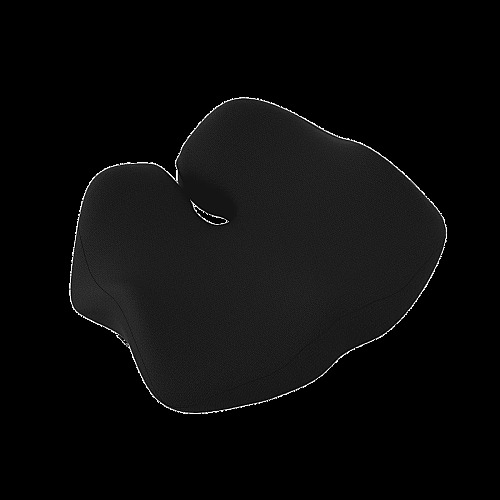
Everlasting Comfort designed The Tucker for exactly this moment. It’s a premium memory foam cushion with a U-shaped coccyx cutout that takes direct pressure off your tailbone. It also has a gentle saddle curve that cradles your sit bones instead of letting them sink and press.
Dr. Mark Avart of Rothman Orthopedics endorses it. XSENSOR has clinically pressure-tested it. It ships free, it’s HSA/FSA eligible, and it comes with a 90-day satisfaction guarantee.
The Everlasting Comfort seat cushion line has picked up 126,000+ reviews brand-wide, and The Tucker is currently 26% off.
Think of it less as a purchase and more as restoring something your body used to do for you.
This article is for informational purposes only and is not medical advice. If you are experiencing persistent pain, new symptoms, or discomfort that concerns you, please consult a qualified healthcare professional. Individual results vary.




Leave a Comment
Your email address will not be published. Required fields are marked *