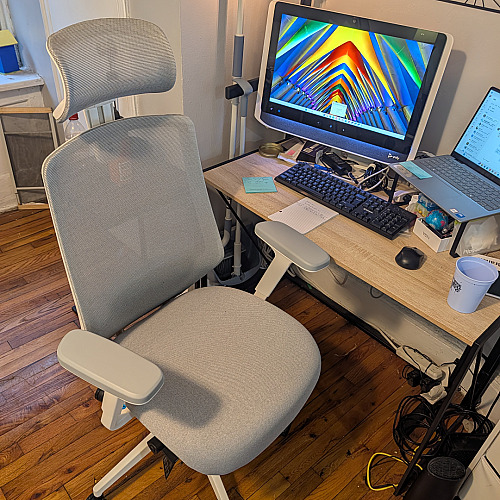
Every other week, without fail, I’m at my chiropractor’s office. Not because I enjoy spending money to have someone aggressively push on my lower back (I don’t), but because if I skip it, I’m in genuine pain within a few days. Pain that makes it impossible to focus, impossible to sit still, and impossible to get anything done. I’m 6’1”, I work from home in New York City, and I sit at a desk for most of my waking hours. When I was in my 20s and early 30s, the pain was manageable, and I was able to pretzel myself into most sitting arrangements. This is no longer the case.
When I close my laptop I want to actually go do things—walk to the subway, catch a show, cover the frankly ridiculous number of steps this city demands of you on any given evening. I don’t want to spend my nights lying on the couch trying to recover from my own chair. For a long time, I just assumed my chair was fine. Comfortable enough, I told myself. It wasn’t until things got bad enough that I started connecting the dots and realized that “comfortable enough” was slowly wrecking me.
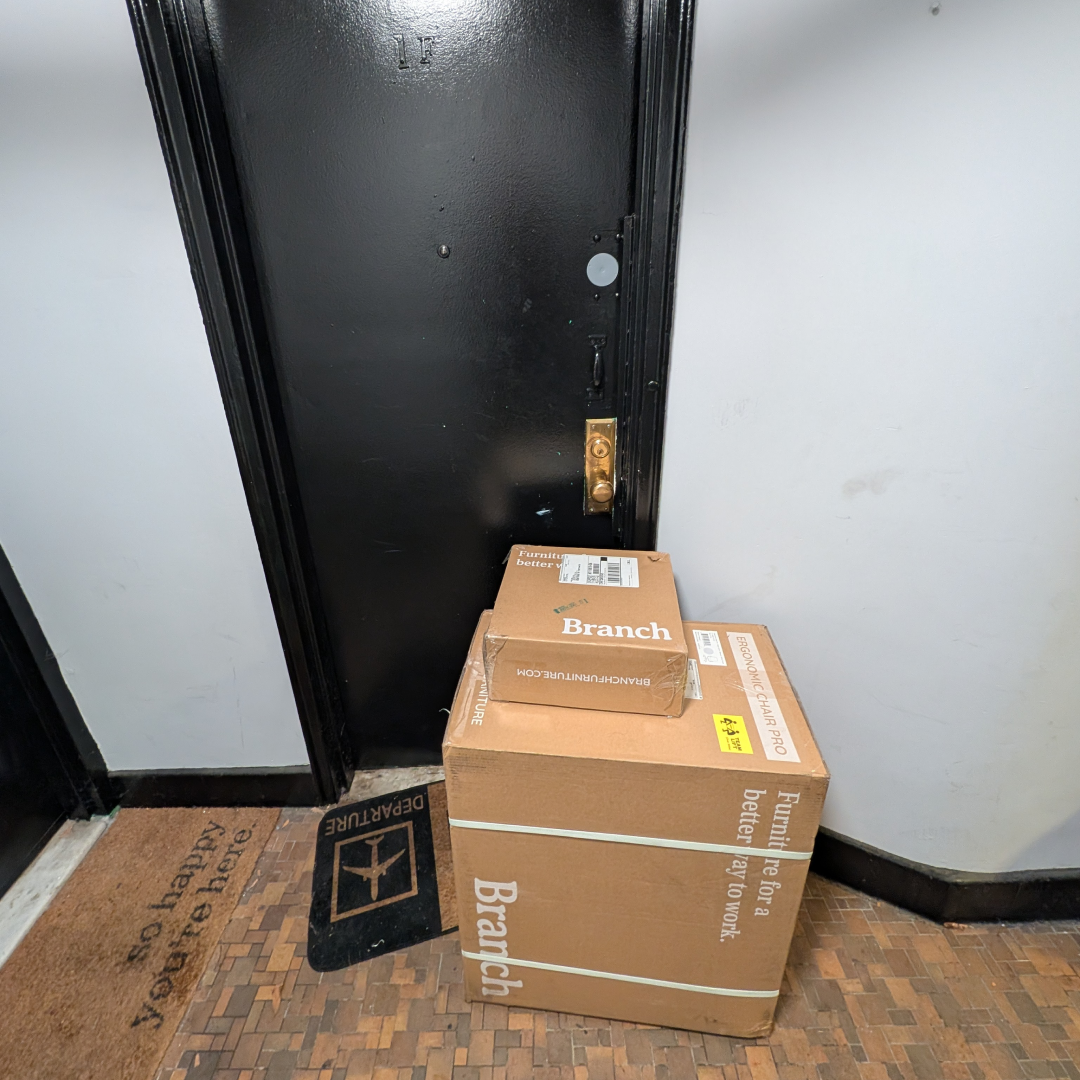
I’ve been through more office chairs than I’d like to admit. Chairs with glowing reviews, chairs with eye-watering price tags, chairs that came with little instruction booklets that I could not make sense of. After enough wasted money and enough bad days, I started specifically hunting for chairs designed with taller bodies in mind. That’s when the Branch Ergonomic Chair Pro, with its optional tall cylinder add-on, kept coming up. I sat in it for several weeks of full workdays before writing any of this.
Why Chair Height Matters More Than Most People Realize
I genuinely didn’t understand what was happening in my body until my chiropractor sat me down (pun intended) and explained it. When a chair can’t go high enough for your leg length, your knees end up above your hips. That forces your pelvis to tilt backward, which flattens your lumbar curve and loads your lower spine in the worst possible position for eight hours straight.
It’s not dramatic. It just slowly grinds you down. It’s why so many tall people end up in physical therapy despite doing everything else right. I was doing everything else right. I was just sitting in the wrong chair. Research published in Ergonomics (De Carvalho & Callaghan, 2023) found that lumbar support and forward seat tilt conditions produced measurably more neutral spine and pelvic postures during prolonged sitting. Reading that felt a bit like finding scientific confirmation of something my body had been screaming at me for years.
The features that help most are the ones that only work if the chair actually fits you in the first place. Revolutionary concept, I know. Most standard ergonomic chairs are designed for a median body. If you’re over 6’, you’re probably at or past the upper end of what those chairs were built for, and you’ve been left to just deal with it. I spent years dealing with it.
The Add-On Built for Taller Sitters
What actually got me interested in the Ergonomic Chair Pro was that Branch clearly thought about taller people as actual people rather than an afterthought. For anyone 5’11” and up, there’s an optional tall cylinder add-on that extends the seat height range instead of leaving you to stack cushions and cross your fingers.
With the standard cylinder, the seat height goes from 17” up to 19.9”. Fine for most people, but tight for taller frames. The tall cylinder bumps the starting height to 19.25” and adds up to three more inches of range, bringing the upper end to 22.9”. For the first time in years of chair shopping, I could actually get my hips above my knees without sacrificing lumbar positioning to do it. That sounds like a small thing. It’s not a small thing.
When your hips are elevated properly, your pelvis can tilt slightly forward, which keeps your lumbar curve where it’s supposed to be instead of working against it. The tension I’d been carrying in my SI joint by the end of every workday started to ease in a way that no amount of lumbar pad fiddling had ever managed.
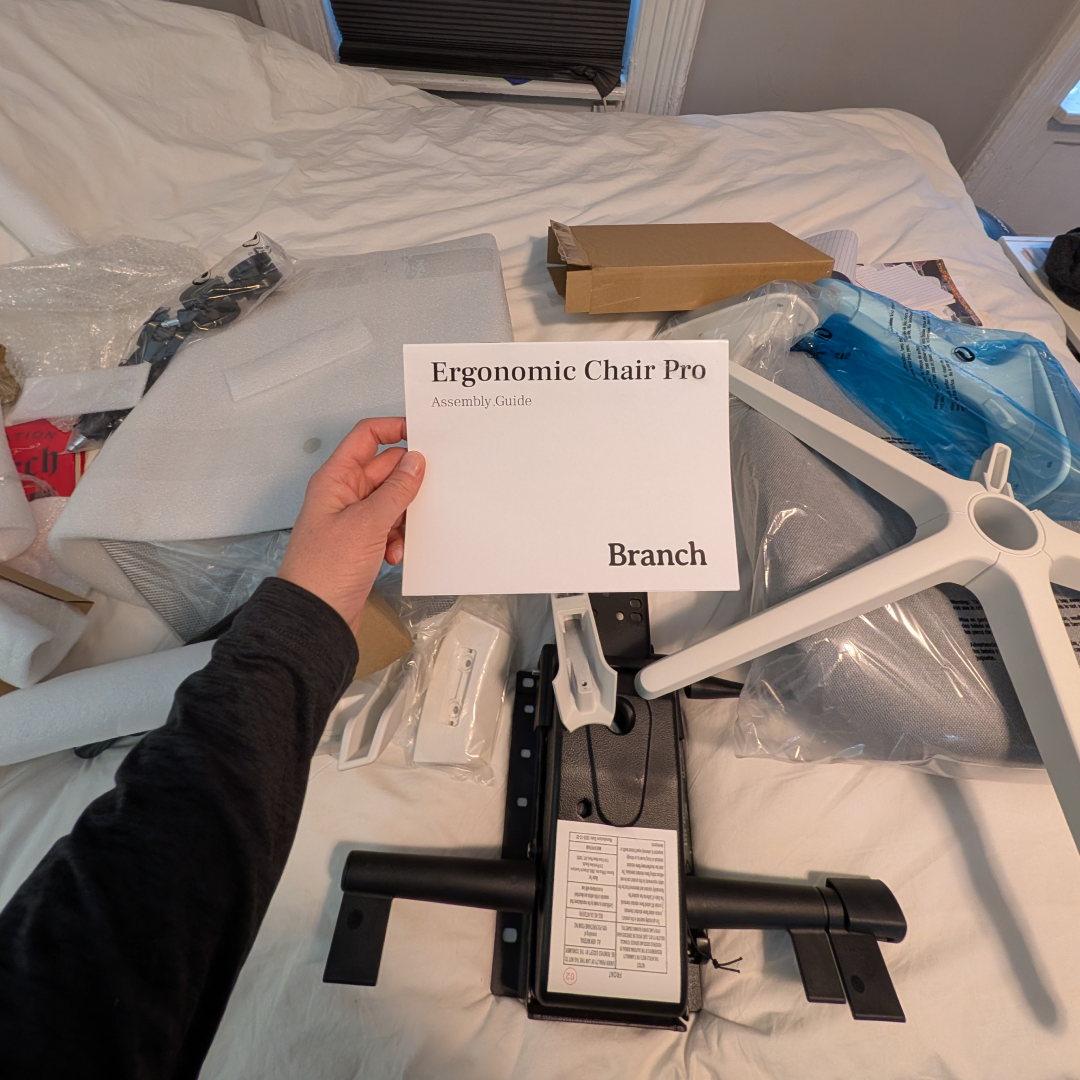
Not only that, but the tension that I’ve always felt in my knees as a result of the awkward angles was also relieved. The tall cylinder is an optional add-on that ships separately, and installation takes only a few minutes with the help of a rubber mallet and a little elbow grease.
If you want to see how all 14 adjustments work together (and there’s a 30-day window to test them in your actual setup), the full specs are worth a look.
Which of the 14 Adjustments Actually Matter
Branch Ergonomic Chair Pro
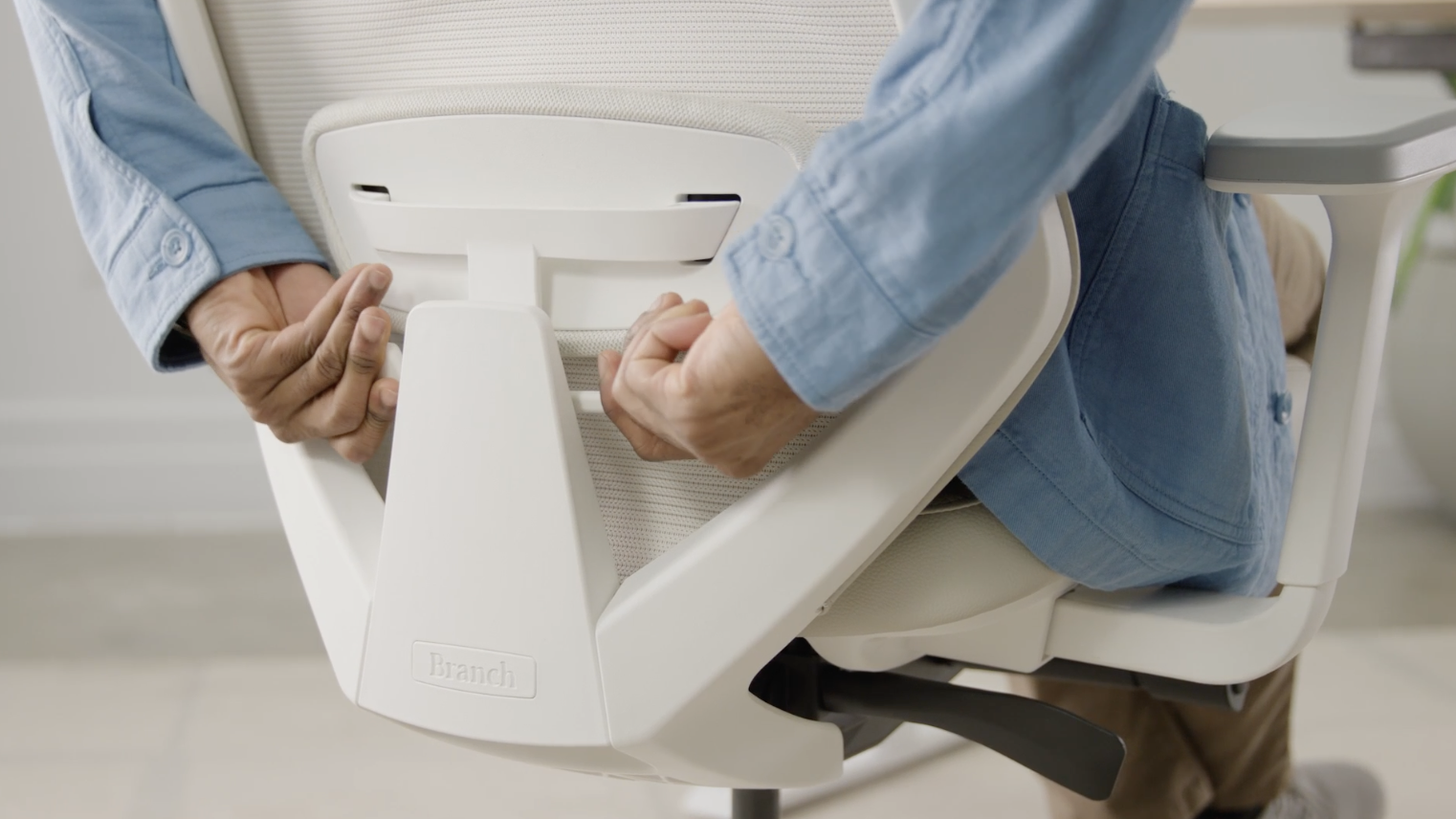
The Ergonomic Chair Pro has 14 points of adjustment, which sounds intimidating until you realize you don’t have to use all of them. You just find the ones that apply to your body and your situation and work from there. For me, managing lower-back and SI joint pain with a longer-than-average torso, a handful of them genuinely changed things from day one.
The lumbar support was the first thing I spent time on. It adjusts both vertically and in pressure, which meant I could actually place it where my lumbar curve sits rather than where the chair designers assumed it would be. If you have a long torso, you know the frustration of a lumbar pad that’s positioned too low. It doesn’t help. It just creates a different problem.
The forward seat tilt was the other big one. Tilting the seat pan slightly forward encourages your pelvis to tip forward, too, which keeps your lumbar curve intact throughout the day. My SI joint is very much a fan of this. Between the tall cylinder and these two adjustments, I was more comfortable in this chair than I’d been in any other.
Seat depth also adjusts by about three inches, which got me to full thigh contact without the seat edge digging into the back of my knees. And the 5D armrests (adjustable in height, width, depth, pad width, and pivot) are worth a special mention for tall women specifically. Being able to widen them outward creates more room across the seat, which matters if you have wider hips (which, as a tall woman, I do).
Chairs with fixed or narrow armrests create this constant low-grade pressure that makes the seat feel like it wasn’t made for you. Because it wasn’t. Widening these out made a genuinely noticeable difference, and it also helped my forearm positioning enough to reduce tension across my upper back by the end of the day.
A Seat That Distributes Weight More Evenly
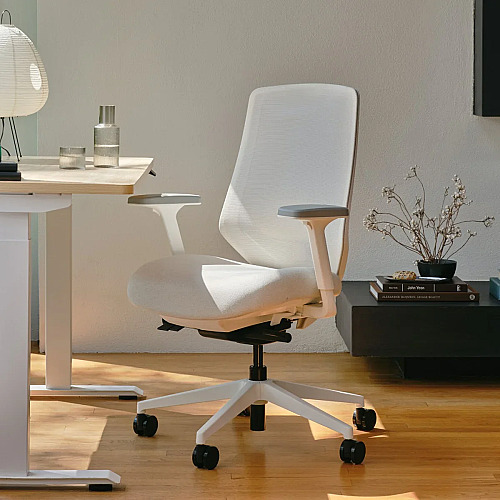
Here’s one I wasn’t expecting: the seat cushion. The Ergonomic Chair Pro uses a high-density foam cushion that distributes weight across the full seat surface instead of concentrating it at the sit bones. For anyone with SI joint issues, this is actually kind of a big deal.
Uneven pressure through the pelvis creates asymmetrical loading across the sacroiliac joint, and over a full workday, that adds up fast. When the seat absorbs and spreads that load more evenly, there’s just less for the joint to deal with.
There’s nothing to adjust here, no dial to turn. It either works, or it doesn’t. After enough hours in the chair, I noticed the absence of the ache I’d come to think of as just part of my day. Turns out it didn’t have to be.
One Honest Limitation Worth Naming
Okay, so it’s not perfect. At 6’1”, the seatback on the Ergonomic Chair Pro doesn’t reach my upper back. The top of the backrest lands around mid-back, which means my thoracic spine is out there on its own. There’s an optional headrest ($69, sold separately) that helps with neck positioning, but it doesn’t close the gap between the backrest and my shoulder blades. That gap is real, and you feel it during longer sessions.
This isn’t something Branch can fix with an adjustment. It would require redesigning the chair. So if upper-back support is your main concern, you should know that going in.
For me personally, the relief in my lower back and SI joint has been significant enough that the upper-back limitation doesn’t change my overall verdict. But I’d rather tell you about it now than have you find out after the box is broken down and in your recycling bin.
The 30-day return window exists precisely for this reason. You can find out for yourself, on your own time, without committing blind.
Pricing and the 30-Day Trial
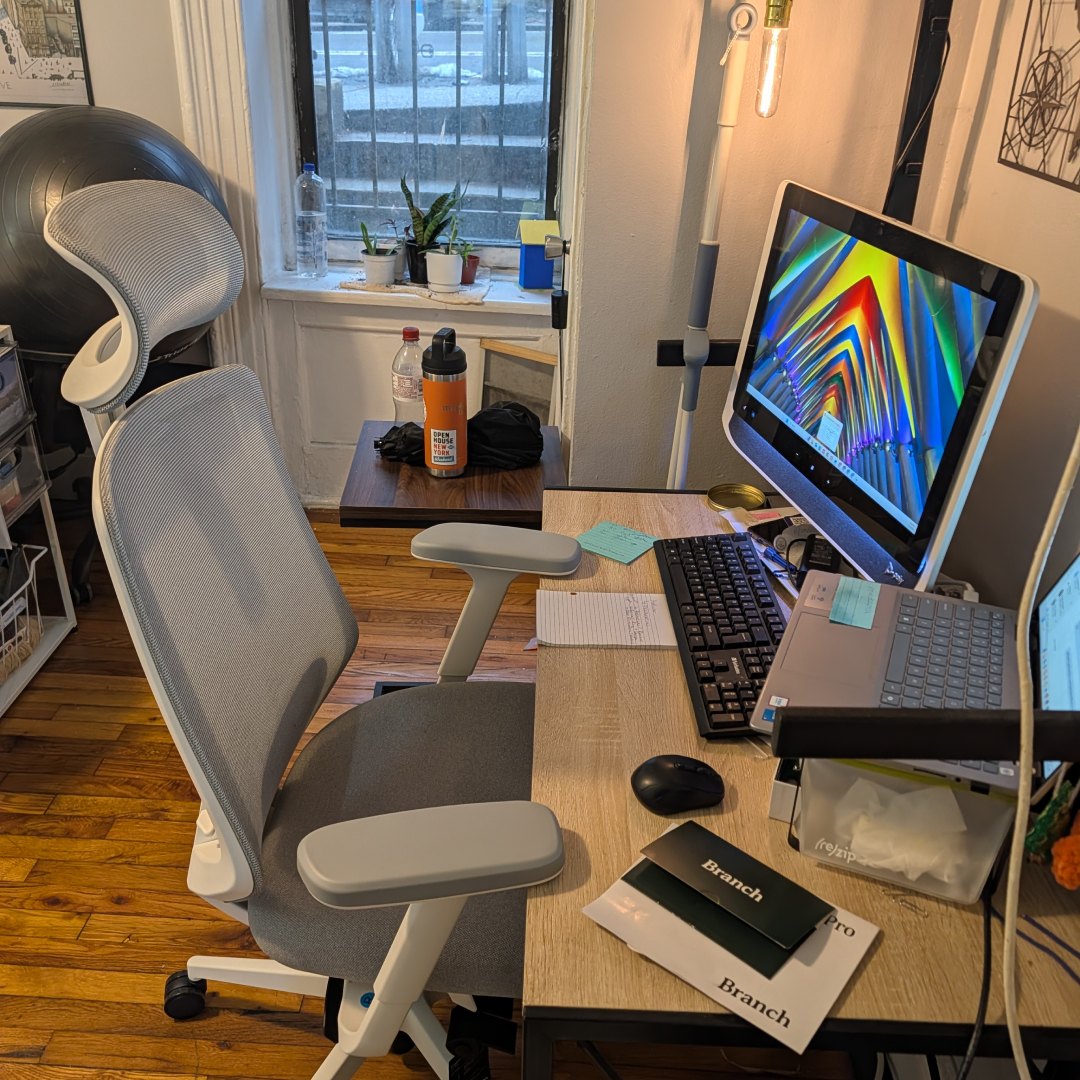
The Ergonomic Chair Pro is $499. Chairs from Herman Miller with comparable adjustability typically start around $1,200 and climb from there. So you’re getting the adjustments that actually matter for roughly half the price of the next tier up.
Branch also backs it with a seven-year warranty and a 30-day return policy with no questions asked. I’ll be upfront: The 30-day window was a big part of why I was willing to try it. An office chair is not a small purchase, and you simply can’t know whether it works for your specific body until you’ve put in real workdays.
Thirty full work days is enough time to actually figure that out. Sitting for 10 minutes in a chair in a random showroom, however, is not. And now that I’ve had time to test a Branch ergonomic chair, I’m even starting to look into different Branch desk styles to accommodate my vertically inclined frame. So it’s a win-win.
The False Economy of Office Chairs and the Final Price You Pay
When I first moved to New York, I bought a cheap desk chair off Facebook Marketplace and told myself it was fine. Then, I bought a few more chairs that were supposed to be better and also weren’t. After enough disappointments, I stopped wanting to spend real money on something I wasn’t sure would be any different.
That turned out to be a false economy that my back paid for. If you’re a tall person managing chronic lower-back or SI joint pain and you’ve been underserved by chairs built for someone shorter than you, the Ergonomic Chair Pro, with the optional tall cylinder, is genuinely worth your attention.
It’s not a miracle. The seatback limitation is real. But it gets the foundational stuff right: seat height, lumbar positioning, and pelvic alignment at a price that doesn’t require a second mortgage, with a return policy that means you’re not just taking my word for it.
What I really didn’t see coming was how less pain at the desk would mean more capacity outside of work. New York doesn’t really let you opt out of being on your feet. There are shows to see, subway stairs to climb, neighborhoods to walk through at 9 PM on a Tuesday because that’s just what you do here. I don’t want to skip any of that.
More walks. More movement. More of the things I’d quietly stopped doing because I was just too sore by the end of the day. I wish I’d made the switch a lot sooner.
This article reflects one writer’s personal experience and is not intended as medical advice. Individual results may vary. If you’re dealing with chronic pain, consult a qualified healthcare provider. All details were verified prior to publication and are subject to change without notice.






Leave a Comment
Your email address will not be published. Required fields are marked *