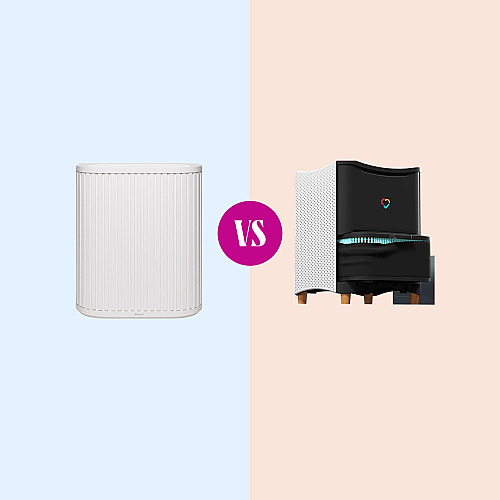
Brought to you in collaboration with Windmill. We only partner with brands that reflect our values and standards, ensuring content that benefits you.
Lately, it seems like everyone’s paying more attention to indoor air, and for good reason. Between pets, allergy season, and everyday dust, it’s no surprise more people are picking up air purifiers. The hard part is figuring out which one is best for your style.
Two popular choices in the premium category are the Windmill Air Purifier and the Mila Air 3. The former is a newcomer that focuses on simplicity and performance with a quiet, innovative, design-forward build. The other is geared towards filter customization and data. So, which one is the better investment?
We put them side by side to compare real specs, day-to-day performance, smart features, and long-term ownership, with a clear verdict for different types of users.
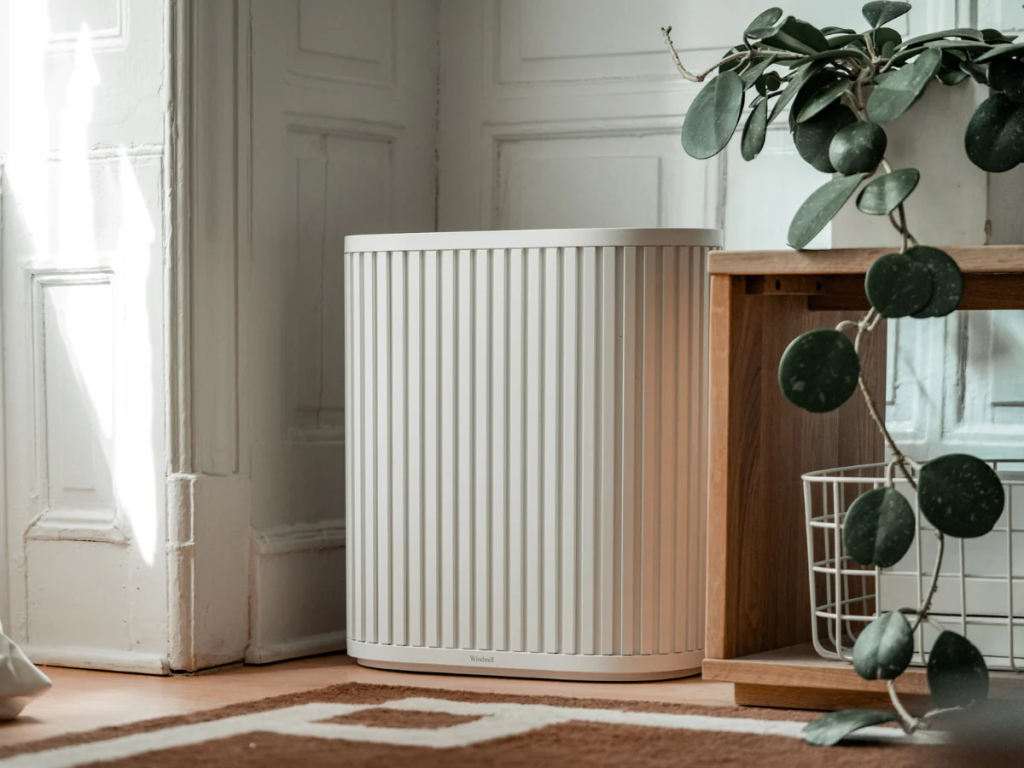
Windmill Air Purifier
Quick Verdict
We love Windmill? for its strong filtration performance with verified CADR ratings.
Windmill Air Purifier
Mila Air 3
Filter Type
HEPA-13, 3-in-1 system
Modular filters (user-selected)
CADR (smoke/pollen)
286 CFM / 343 CFM
~271 CFM (combined, no pollutant breakdown)
Noise Level
As low as 16 dB
As low as 23 dB
Smart Features
App; Works with Alexa & Google
App; Works with Alexa, Google, & Apple
Maintenance
One filter, 6-month lifespan; subscription available
Multiple filters types; 6-month lifespan
Warranty
Lifetime (direct); 3-year (retail)
2-year
Price (as listed in May 2025)
Starts at $399
Starts at $349
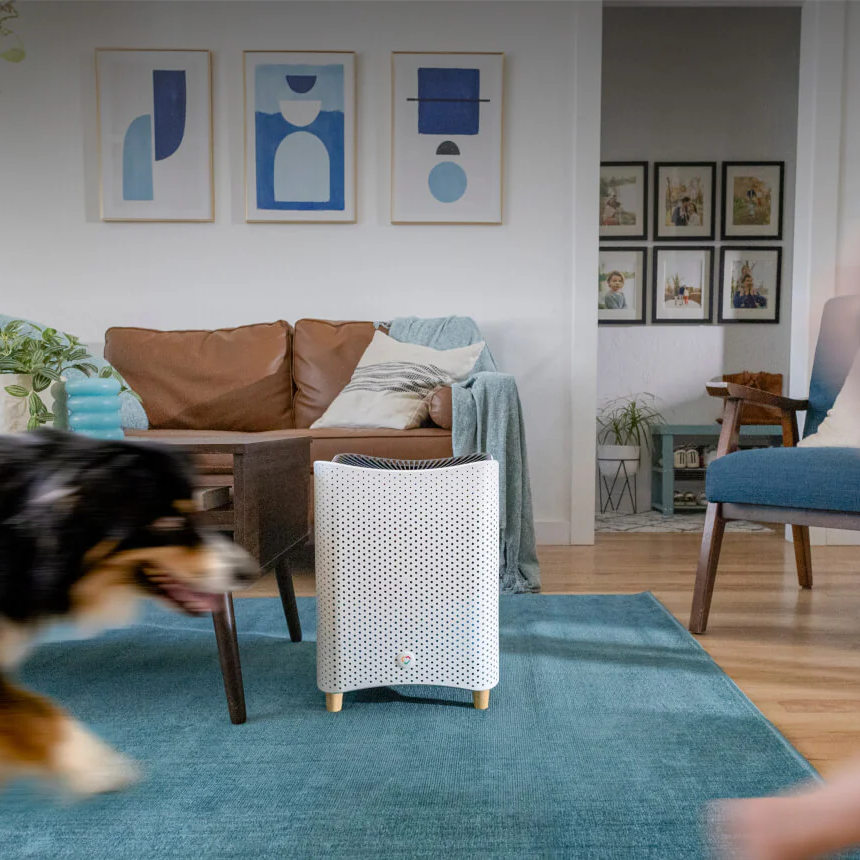
Mila Air 3
Filtration Performance
Mila Air 3 uses a modular filter system, with options tuned for different concerns, like mold or pet allergens. That’s helpful if you know exactly what you’re trying to filter out, but it also means performance depends on which filter you pick. The brand lists a total airflow CADR of 460 m³/h (about 271 CFM), but doesn’t share pollutant-specific scores.
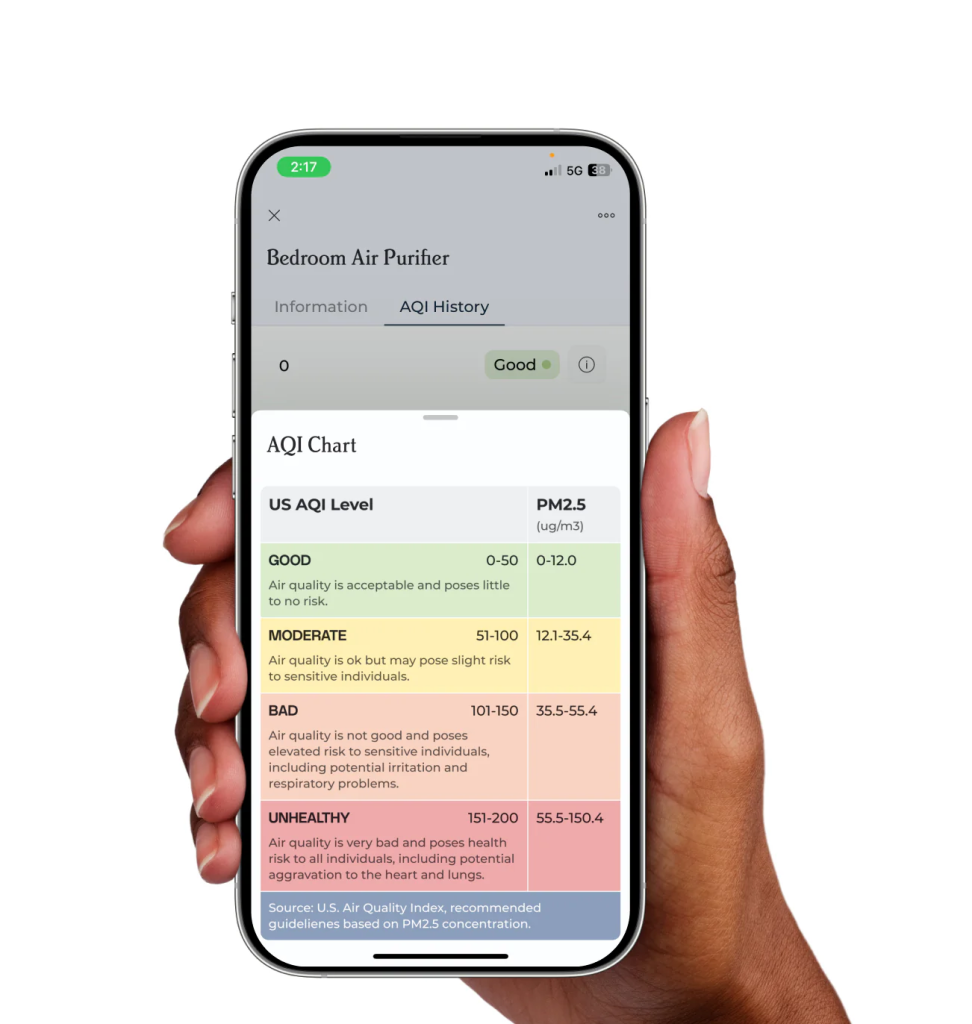
Windmill’s App
Smart Features and App Integration
Windmill‘s app shows your air quality and gives you a few basic controls. You can turn on Auto Mode or adjust the fan yourself, and it connects with Alexa and Google if they’re something you use. It quietly takes care of things in the background, which is kind of the point.
Mila? gives you more to work with, as the app shows detailed sensor data, including carbon dioxide and humidity levels. It also works with Apple HomeKit, along with Alexa and Google. But it does ask more of you. There’s more setup, more options, and more to keep track of.
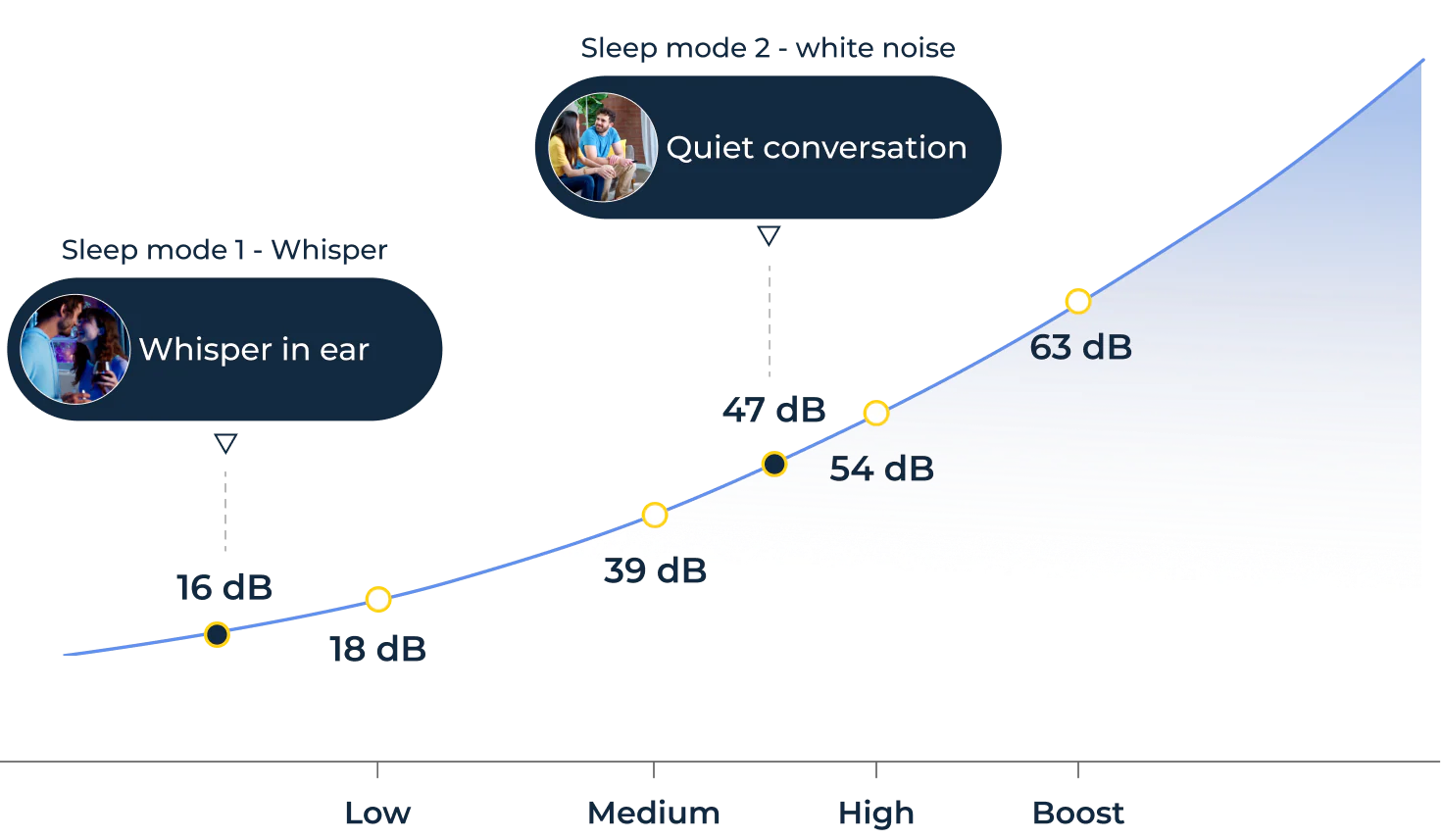
Windmill Air Purifier noise levels
Noise Levels: Bedroom-Ready or Not?
Mila Air 3 also has quiet modes, and it does a good job of staying unobtrusive in smaller spaces. However, the starting noise level is around 23 dB.
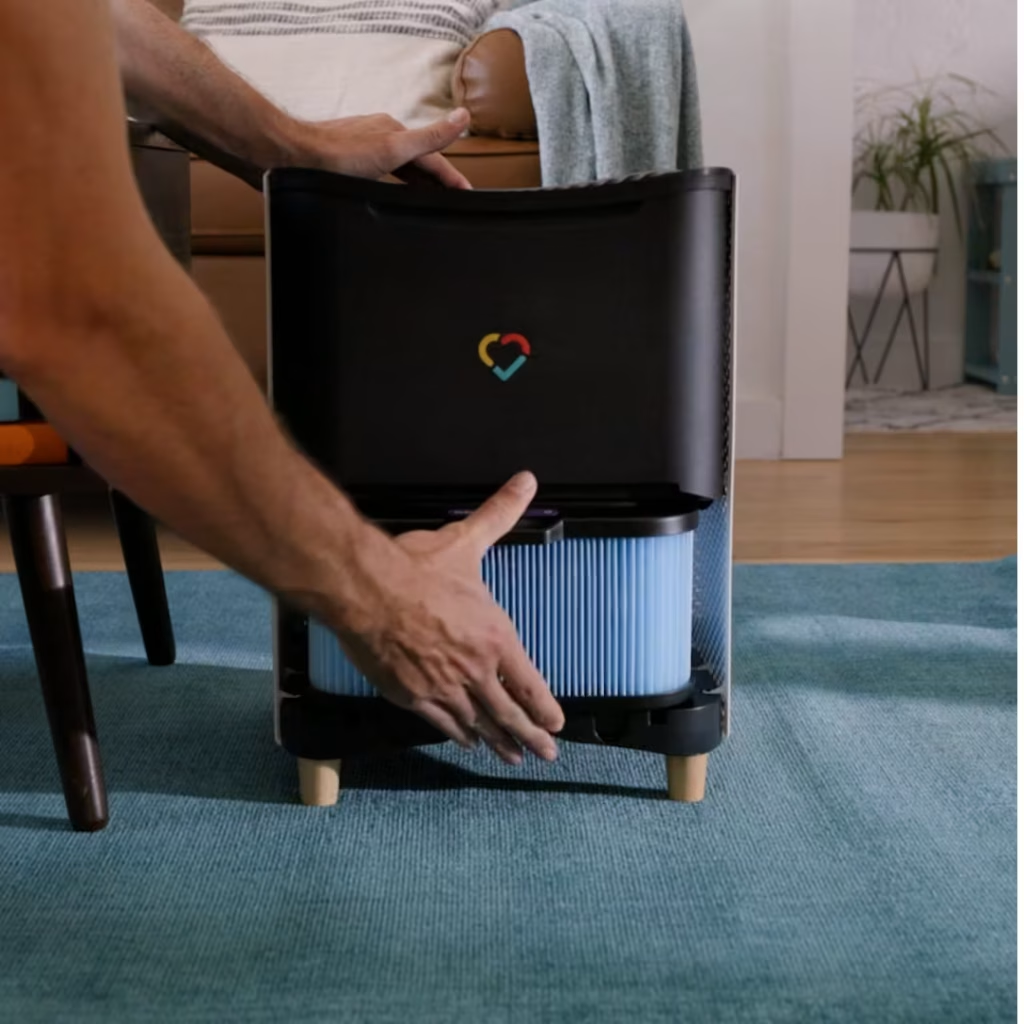
Mila Air 3 Filter
Filter Changes and Total Cost of Ownership
Mila Air 3 filters also last around 6 months and the starting price is the same, but the total cost depends on the filter you choose. Filters range from $59 to $99, which puts the two-year cost in the $526–$646 range.
Note: Mila Air 3 comes with a 24-month warranty, and Windmill with a lifetime warranty when purchased directly from their website.
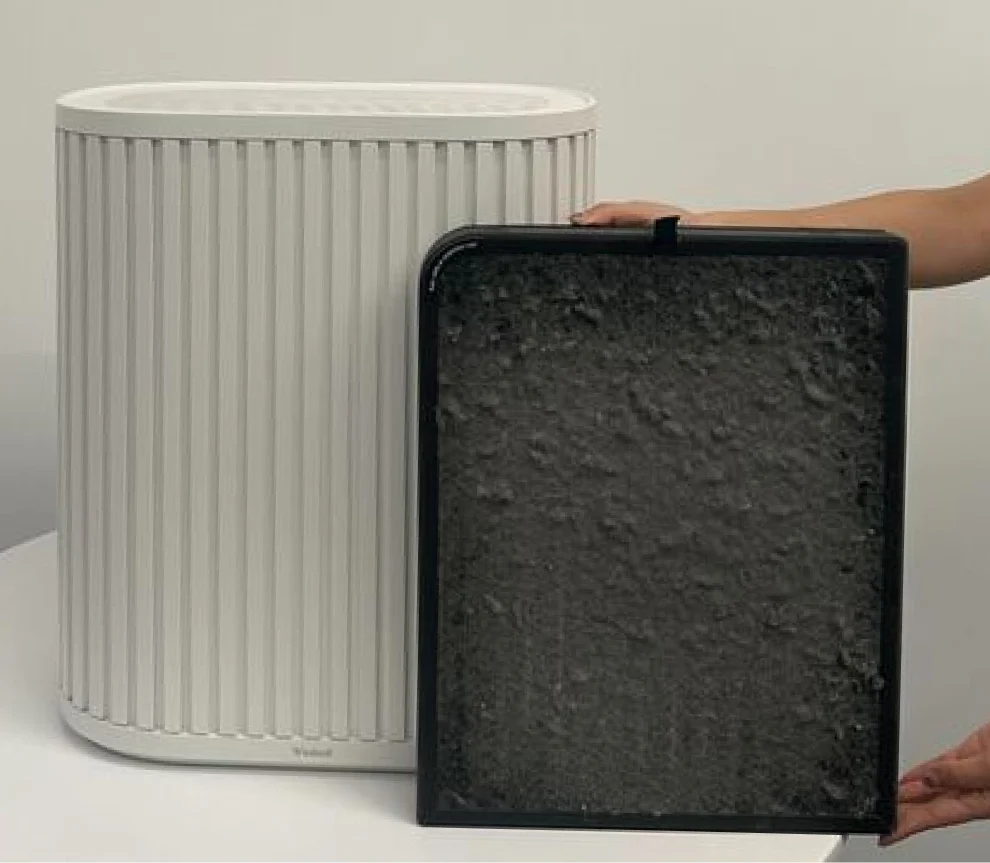
Windmill Air Filter
Energy Efficiency and Environmental Considerations
Windmill is Energy Star certified, which means it’s been tested for low power use. The fan adjusts automatically depending on the air in the room, so it’s not running harder than it needs to. That helps with energy bills and keeps things more efficient over time.
Mila Air 3 has Auto and Sleep modes that can help save power, but there’s no Energy Star certification listed on the site.
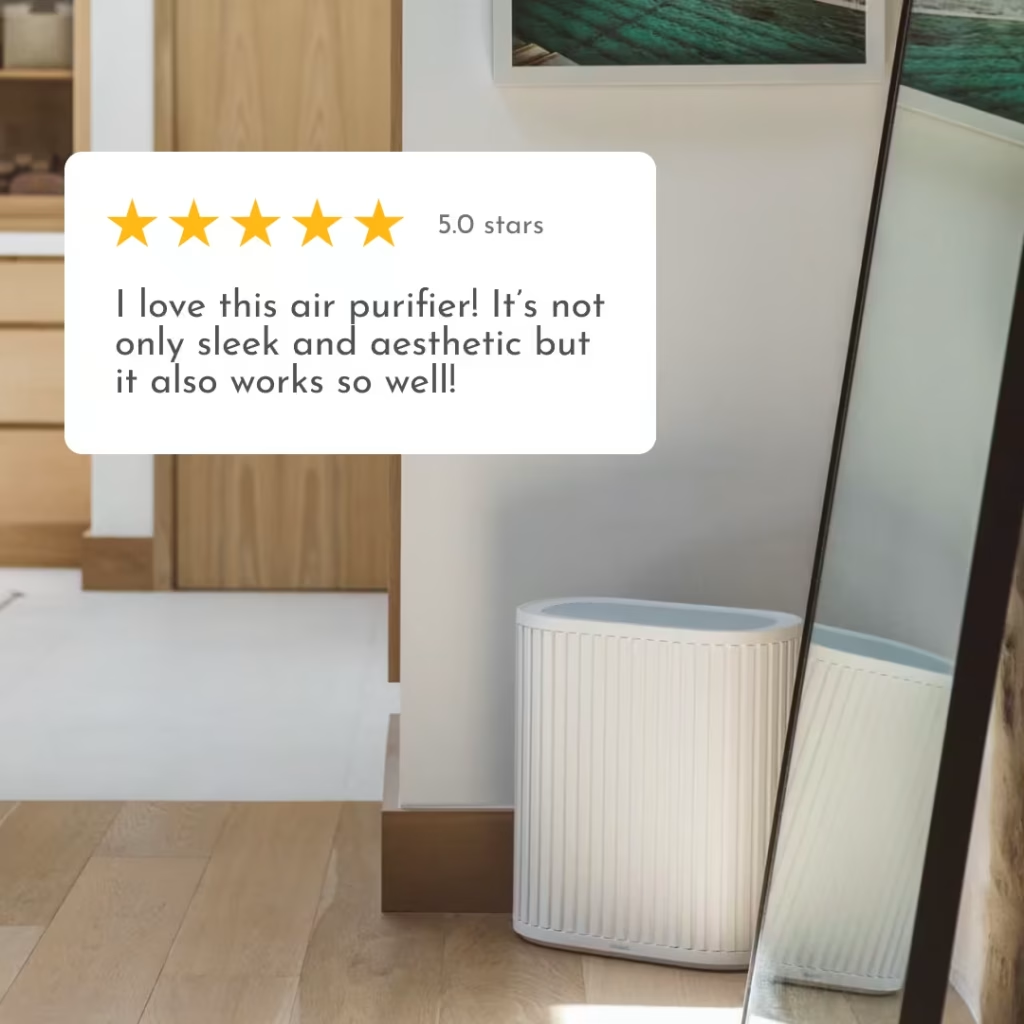
Windmill reviews
What Real Users Are Saying
Windmill users frequently mention its quiet performance, sleek design, and how easy it is to set up and use. It’s often described as ideal for bedrooms or small apartments.
Mila Air 3 has a loyal following among users who want in-depth data and customization. They highlight the strength of its app and environmental sensors, though some say the feature set can feel overwhelming.
Which Air Purifier Is Right for You?
Windmill Air Purifier
Mila Air 3
Filtration System
HEPA-13 (captures 99.97% >0.3 um); 3-in-1 filter includes carbon + prefilter
Modular HEPA system; filter performance depends on selection
CADR Ratings
343 CFM (pollen), 286 CFM (smoke), 284 CFRM (dust), PM2.5 (260 CFM)
~271 CFM; no pollutant-specific ratings
Noise Levels
18dB on low, 16dB in sleep mode; 47dB white noise option available
Starts around 23 dB; varies by filter and settings
Smart Features
Auto Mode, app control, Alexa and Google Assistant integration
Sensor-rich app with CO2, humidity, VOCs; supports Alexa, Google, Apple
Maintenance & Filters
6-month lifespan; subscription option simplifies upkeep
6-month lifespan; multiple filters available may require more planning
Warranty
Lifetime warranty (directly); 3-year limited warranty from retailers
2-year warranty
Energy Use
Certifications: ETL, Energy Star, AHAM Verified
No certification listed
2-year Ownership Cost
$529 (purifier + 6-month medical-grade HEPA filter refills)
$526-$646 (purifier + 6-month refills, depending on filter type)
Both purifiers do their job well, but they seem made for different types of users. Mila Air 3 is better suited to those who enjoy more customization and tracking more data, while Windmill is the better fit if you want a smart purifier that blends quietly into your space and works without much fiddling. (Not to mention its lifetime warranty.)
Choose Windmill today? for its strong filtration performance with verified CADR ratings, and subscribe for HEPA 3-in-1 filters to ensure long-term performance!
Shop Windmill
FAQs
Q: How frequently do I need to replace the filters?
Both Windmill and Mila Air 3 recommend changing the HEPA filters every 6 months.
Q: Do these purifiers remove pet hair and dander?
Yes. Windmill’s HEPA-13 filter captures pet dander effectively. Mila Air 3 offers specialized filter options that target pet allergens.
Q: Can I use either one in the bedroom?
Windmill is especially well-suited for bedrooms thanks to its ultra-quiet operation and dimmable display. Mila Air 3 also supports quiet operation.
Q: What’s the room size recommendation?
Windmill covers rooms up to 442 sq ft. Mila Air 3 supports up to 400 sq ft at five air changes per hour.






Leave a Comment
Your email address will not be published. Required fields are marked *