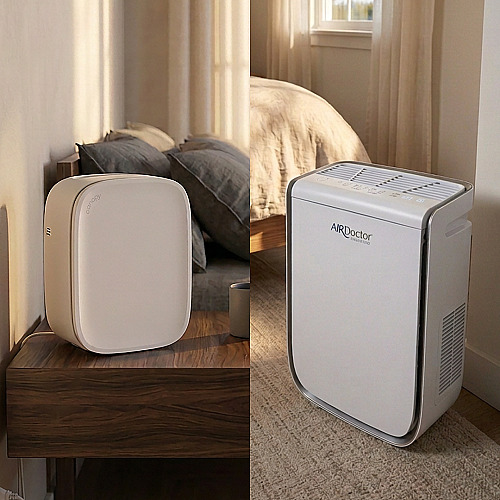
The room was cool, the pillow was fluffy, and it’s not allergy season, so why are you still waking up stuffy? The answer is likely your air quality. Dust, pollen, and whatever your HVAC recirculates while you sleep can pile up fast. If you’ve been struggling in this area, a bedside air purifier should be your next purchase.
Don’t go down the rabbit hole of comparing hundreds of them, though. The Canopy Bedside Air Purifier and the AirDoctor 2000 should be at the top of your list.
We pulled current details from each brand, checked the sound numbers against independent testing, and matched the filtration claims to the EPA’s own science. Cost, noise, design, and long-term upkeep drive the choice.
The Head-to-Head at a Glance
Start with the numbers, then we’ll unpack what each spec means for your bedroom.
Canopy Bedside Air Purifier | AirDoctor 2000 | |
|---|---|---|
Price | $199 | $399 |
Sound Range | 17.5–50 dB (manufacturer) | ~26–54 dB (third-party tested) |
Weight | 4 lbs | 10 lbs |
Room Coverage | 416 sq ft in 1 hour | 305 sq ft at 4 air changes/hour |
CADR (Smoke) | 45 CFM | 162 CFM |
Filter Standard | HEPA-13 (ISO 29463) | UltraHEPA (proprietary) |
Particle Capture | 99.97% at 0.3 microns | 99.99% at 0.003 microns |
Filter Cost/Year | $78 with subscription | $107.94 with subscription |
Placement | Vertical or horizontal | Upright only |
Extras | Aroma diffuser, night light, USB-C, white noise | Auto mode, 24-hour timer |
Price and Cost of Ownership
The sticker price gets you the device, but filter replacements continue for as long as you own it. For the full picture, we need to compare both.
Canopy comes in cheaper across the board:
Purchase price: $199
Filter subscription: $78/year ($39 per shipment, ships automatically every six months)
Retail without subscription: $90/year ($45 per filter, purchased individually)
AirDoctor 2000 costs more from purchase through upkeep:
Purchase price: $399
Filter subscription: $107.94/year ($107.94 per shipment, ships automatically every 12 months after the first at six months)
Without subscription: $126.99/year (1-Year Combo Pack)
Compared subscription to subscription, Canopy filter costs total about $390 versus $540 for AirDoctor over five years. That’s about $150 more in ongoing spend and roughly $350 more once you factor in the initial cost of the device.
Sound at Night
Canopy publishes a range of 17.5–50 dB, with the low end representing the fan setting most people rely on at night. For reference, 17.5 dB is quieter than a whisper, so you won’t hear it running once you close your eyes.
AirDoctor doesn’t publish a decibel spec, so we relied on third-party audits. A formal sound-meter test by Modern Castle measured the unit at roughly 26–54 dB across its speeds. Other reviewers commonly cite around 30 dB at the lowest fan setting. Thirty decibels feels like a hushed library, and in a dark bedroom, you’ll notice it.
Design and Portability
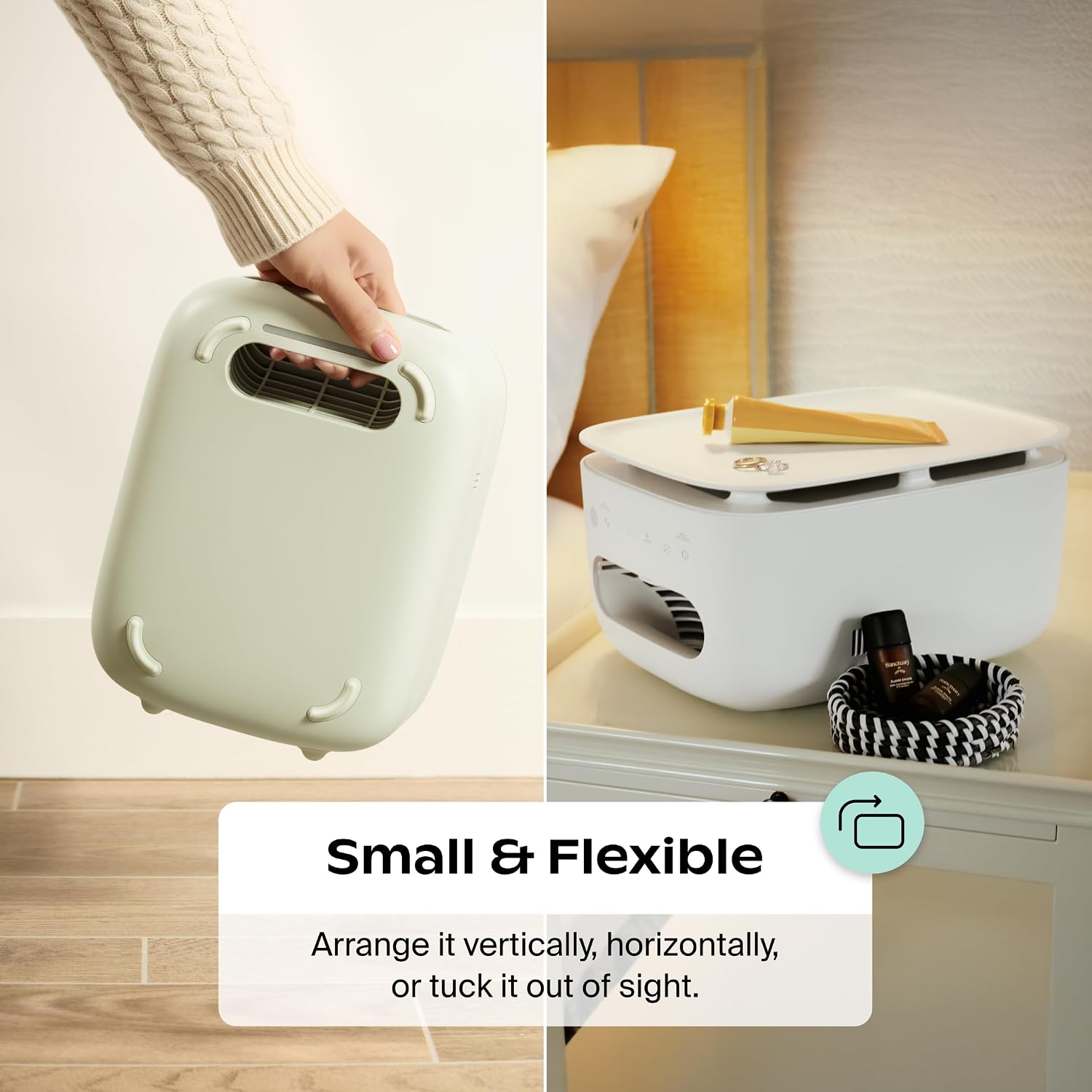
Your nightstand is already crowded. You’ve got a lamp, a book you swear you’ll finish, a phone charger, a water glass, and maybe a plant on its last legs. Adding a purifier means something has to give.
The Canopy Bedside Air Purifier is built for that problem. At 4 pounds, it’s about the size of a paperback stood on end. Three details make it work as a bedside device:
Sits upright or lies flat, so a narrow table isn’t a dealbreaker
Built-in USB-C port charges your phone off the unit itself, meaning one fewer thing fighting for the wall outlet
Stacks with the Canopy Bedside Humidifier if you want humidity and filtration on the same footprint
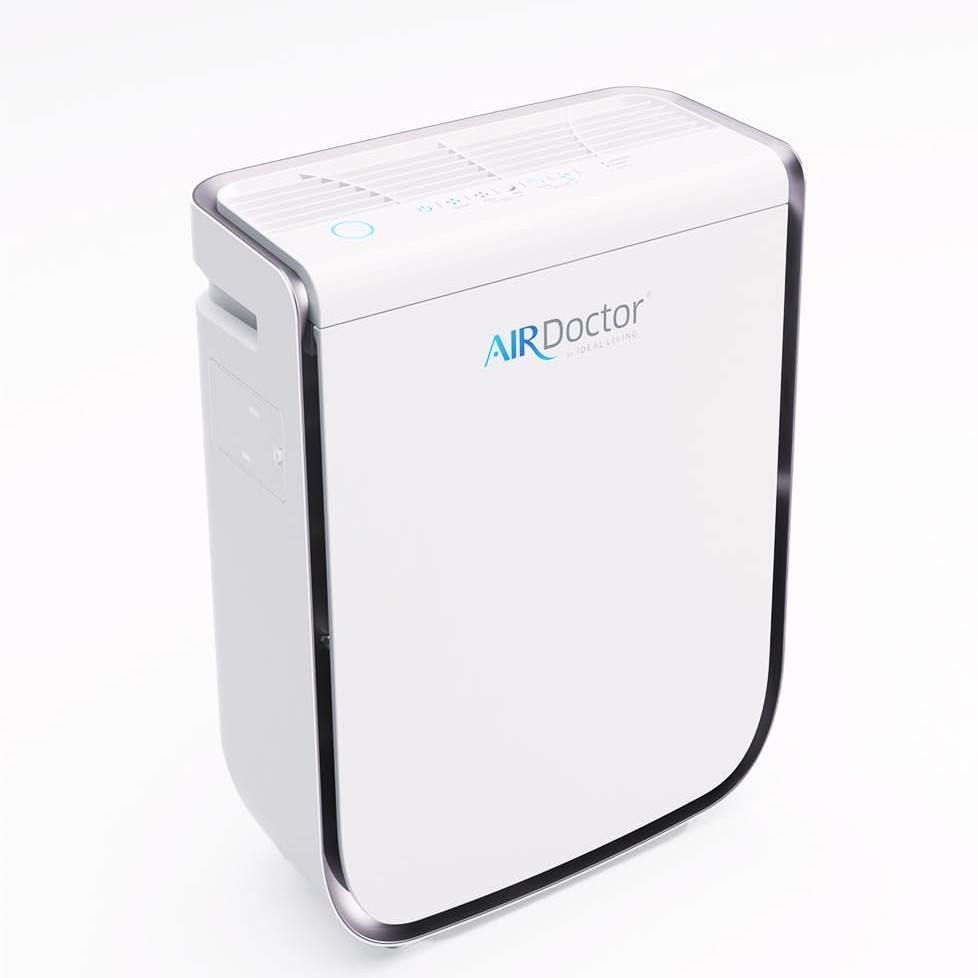
At 19 inches tall and 10 pounds, the AirDoctor 2000 lives on the floor or a shelf. That size buys
More airflow and a taller intake, so it clears a room faster or handles a larger one
A handle indent for repositioning, though this is the kind of device that finds its spot and settles in
For a bedroom, the smaller Canopy wins on portability and vibe.
Filtration
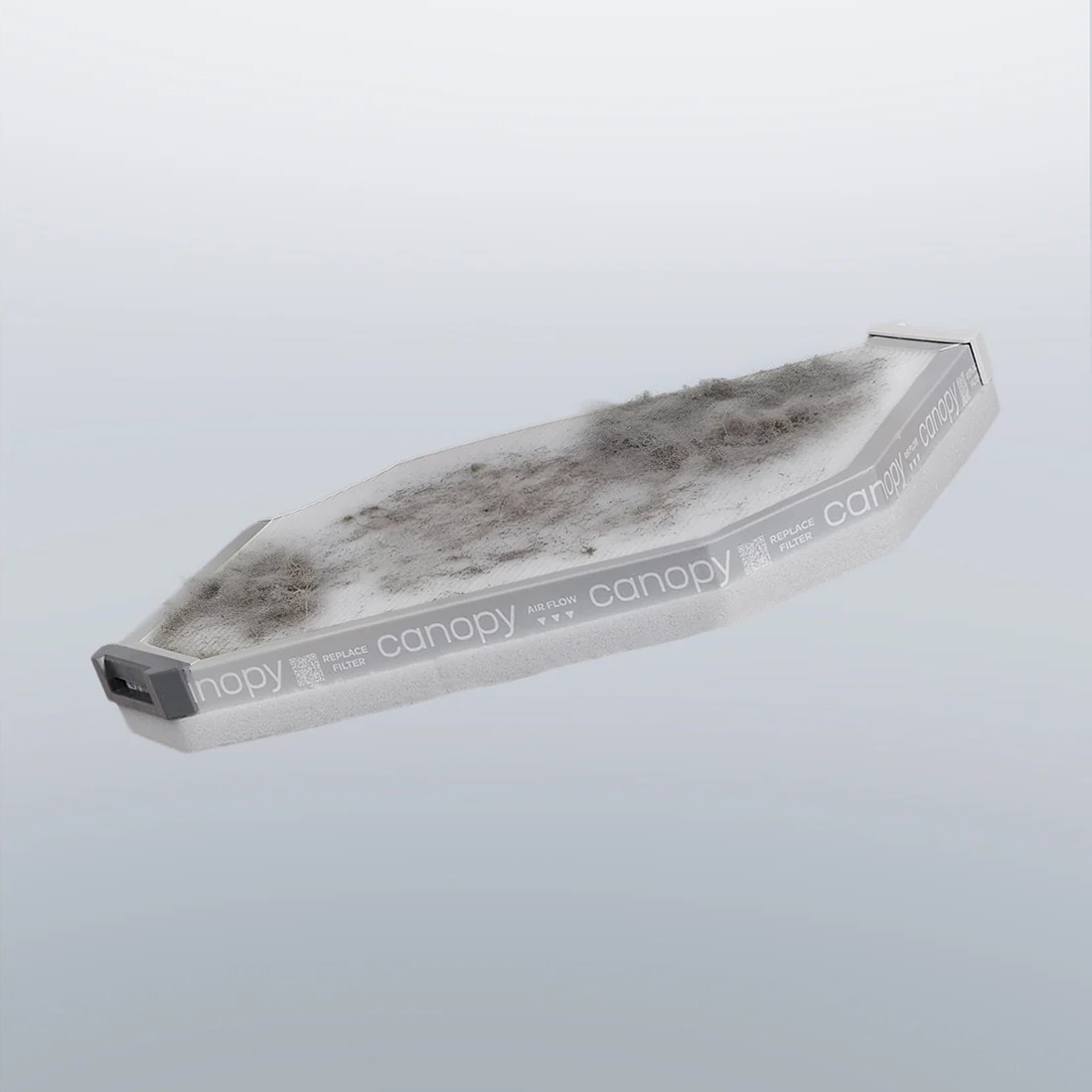
Both purifiers do the same job. Both use a real HEPA filter to trap dust, pollen, smoke, pet dander, and everything else you’d rather not breathe. Canopy uses an industry-standard HEPA rating; AirDoctor markets a proprietary label.
The Canopy Bedside Air Purifier is a certified HEPA filter, catching up to 99.97% of particles as small as 0.3 microns*. The AirDoctor 2000 markets “UltraHEPA” as capable of catching particles down to 0.003 microns, 100 times smaller than the industry benchmark. That sounds like a huge win, but it’s not, really.
Filters have a Goldilocks problem. Tiny particles wander randomly and hit filter fibers on the way through. Big particles carry too much momentum to follow airflow through a filter, so they crash into it. Particles around 0.3 microns escape both traps and slip past the fibers with the flow of air.
That’s why HEPA testing uses 0.3 microns as the benchmark. It’s the hardest particle size to trap, so a filter certified at that threshold typically performs even better on smaller and larger particles.
The 0.003-micron figure looks more impressive on paper than in practice. Canopy’s HEPA-13 filter and AirDoctor’s UltraHEPA both clear the same real-world job on allergens, smoke, and dust.
Airflow and Room Capacity
Two numbers describe how well a purifier keeps a room clean. Coverage is the room size a unit is designed for. Clean Air Delivery Rate (CADR) is how much clean air the fan pushes out per minute, in cubic feet per minute (CFM).
Both brands publish coverage figures on different standards. Canopy assumes the room’s air cycles through the filter once per hour; AirDoctor assumes four times. CADR is the more direct comparison.
Canopy targets a typical bedroom at a modest air-change rate:
Coverage: 416 sq ft in one hour (one air change per hour)
Smoke CADR: 45 CFM
AirDoctor 2000 pushes more air per minute at a higher air-change target:
Coverage: 305 sq ft at four air changes per hour
Smoke CADR: 162 CFM (roughly 3.5 times Canopy’s rate)
For a typical bedroom, either purifier does the job. When the room gets busier or the air load spikes (cooking, pets, seasonal allergens), AirDoctor’s higher CADR pulls ahead.
Maintenance
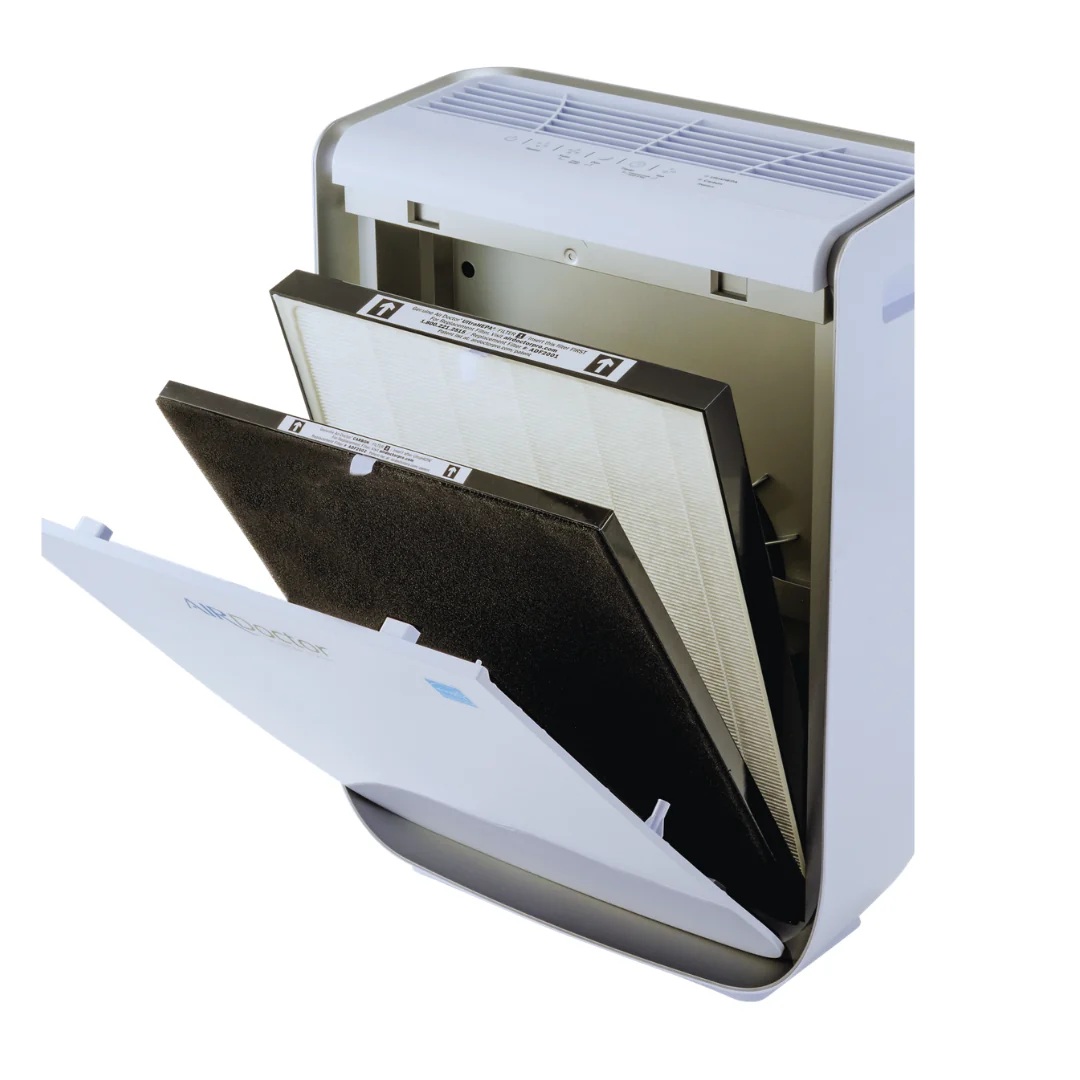
Filter changes are either a 30-second chore or a job you dread every six months, depending on how the manufacturer designs them. Canopy keeps it simple:
Single filter, changed every six months
Touch-free eject drops the used cartridge straight into the trash
No app or Wi-Fi required
AirDoctor 2000 runs a two-track schedule with separate lifespans for each layer:
Carbon/VOC layer swapped every six months
UltraHEPA layer swapped every 12 months
Filter changes require handling the used cartridge
Lifestyle Features That Show Up at Bedtime
Canopy layered in the small touches you notice at 10 PM. A built-in aroma diffuser holds a felt pad you dose with essential oil, so a scent like bergamot or eucalyptus rides the airflow into your room. A dimmable white or red night light gives you ambient glow if you want it or stays off if you don’t. A white-noise setting masks hallway sound, and Sleep-Safe Auto Mode dims the lights and locks fan speed steady once darkness falls.
AirDoctor 2000 focuses on the fundamentals, offering auto-adjust based on detected air quality and a 24-hour timer for scheduling. These are practical additions, not sleep-focused touches. If your priority is a bedtime ritual, Canopy brings more to the nightstand.
The Verdict
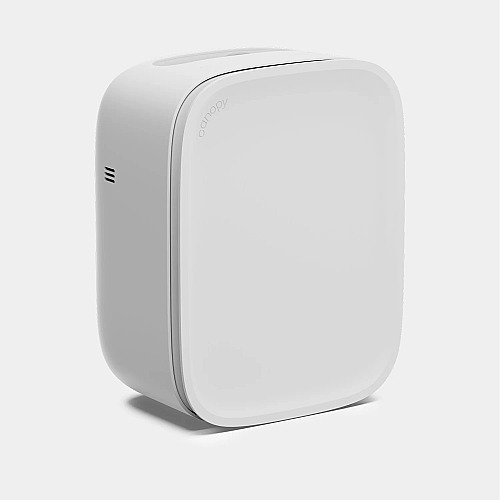
The AirDoctor 2000 is a capable purifier, especially in bigger rooms or when you need to clear the air fast (think cooking, wildfire smoke season, or a sick day at home). It brings awards, branded filter technology, and a price tag to match.
The Canopy Bedside Air Purifier costs half as much upfront, runs quieter at the low setting most people use nightly, weighs 60% less, and folds in a diffuser, night light, and white noise you’d otherwise buy separately. Over five years, replacements cost less, too. Both units meet the same real-world results on allergens, smoke, and dust.
For your bedroom, Canopy is the better buy. Free U.S. shipping comes standard on orders over $25, and every device is backed by a one-year warranty. If it doesn’t fit your setup within the first 60 days, you can return it for a full refund, minus a $10 handling fee. On price, sound, and bedside experience, Canopy makes the stronger case.
*Tested to ISO 29463 standards
All details were verified at the time of publication and are subject to change without notice. This article is for informational purposes only and does not constitute medical advice. Consult a healthcare professional for guidance on managing allergies, asthma, or other respiratory concerns.






Leave a Comment
Your email address will not be published. Required fields are marked *