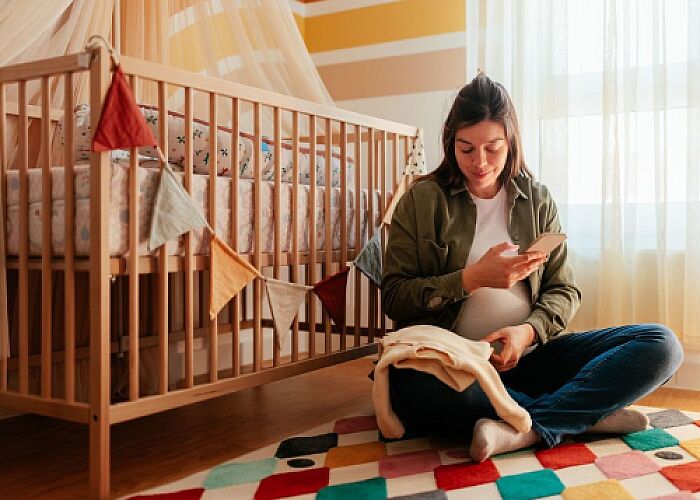
The nursery checklist gets longer every time you look at it. Paint color, crib slats, mattress materials, blackout shades, a monitor with the right range. Every decision came down to safety, comfort, or both. But have you thought about a nursery air purifier?
The EPA reports that indoor pollutant concentrations are often 2 to 5 times higher than outdoor levels. Fresh paint, new furniture, and soft furnishings can push that number even higher in the weeks after setup. The good news is that addressing nursery air quality doesn’t require a complete overhaul of everything you’ve already planned. It just means adding one more item to the list.
Why the Nursery Is a Unique Environment
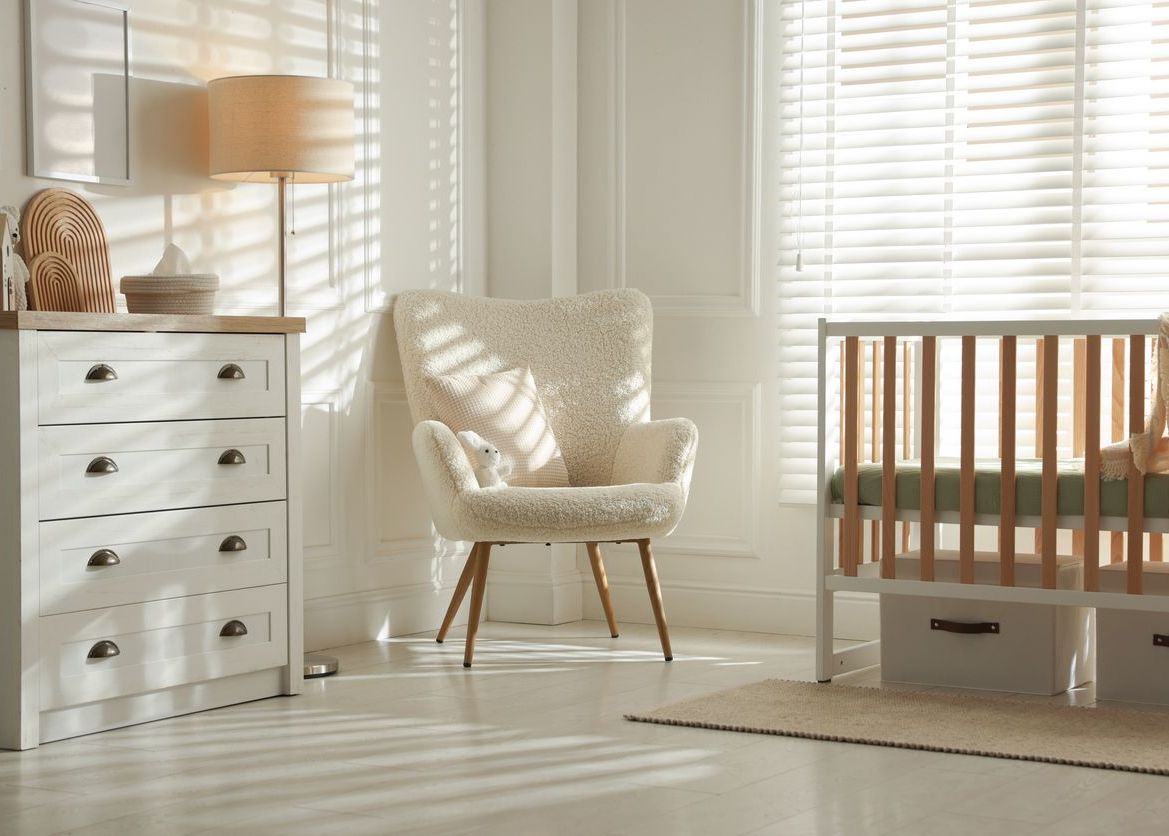
New nurseries are full of new things, and new things off-gas. Fresh paint releases volatile organic compounds, or VOCs, into the air long after application. New furniture, carpet, and foam mattresses do the same. The EPA notes that VOC levels can spike to 1,000 times background outdoor levels during and for several hours after certain activities, like paint stripping. The room you’ve worked so hard to make beautiful may temporarily be at its least ideal, air-quality-wise, right before your baby moves in.
It doesn’t stop at VOCs, either. The most common culprits in a nursery include
Dust and fine particles from bedding, rugs, and soft furnishings that accumulate quickly in a space with limited ventilation
Pet dander, which is highly adherent and easily tracked into rooms even if pets aren’t allowed inside them
Diaper pail odors, ammonia-based and persistent, especially in a smaller, enclosed space
Outdoor pollutants, like pollen, wildfire smoke, and vehicle exhaust that enter through windows and HVAC systems
Children are also more vulnerable to these pollutants than adults. The American Lung Association’s State of the Air 2026 report notes that children’s lungs are still developing, and they breathe more air relative to body size than adults do. Nearly half of American children (46%) live in counties that received a failing grade for at least one measure of air pollution. That’s 33.5 million kids, many of whom are spending most of their time indoors.
What You Can Do About It
Ventilation helps, especially in the weeks right after painting or installing new furniture. Opening windows when weather allows, running bathroom or kitchen fans to move air through the home, and choosing low-VOC paint formulas all make a meaningful difference. These are solid first steps and worth doing regardless of what else you bring into the mix.
The limitation, of course, is that you can’t control outdoor air quality with an open window. On days with elevated pollen, wildfire smoke, or poor particulate ratings, an open window pulls those issues in rather than filtering them out. And for a room occupied by a sleeping infant with no ability to communicate discomfort, consistency matters. Enter the air purifier.
What to Look for in a Nursery Air Purifier
Not every air purifier is designed with a nursery in mind. The features that matter most for this specific space include
Quiet operation: Anything that cycles into high gear at 2 AM isn’t going to work well.
HEPA filtration: This will capture particles as small as 0.3 microns, including dust, pollen, and pet dander.
Activated carbon: This is what tackles odors and gaseous pollutants that a standard HEPA filter won’t catch.
No disruptive lights or alerts: Bright indicators and sudden beeps are a problem in a dark sleep environment.
Compact footprint: Nurseries are tight on space; the purifier shouldn’t compete with everything else you’ve placed in the room.
That’s a specific list, and most mainstream purifiers hit two or three of those criteria before falling short on the rest. Very few address all five.
The Canopy Nursery Air Purifier
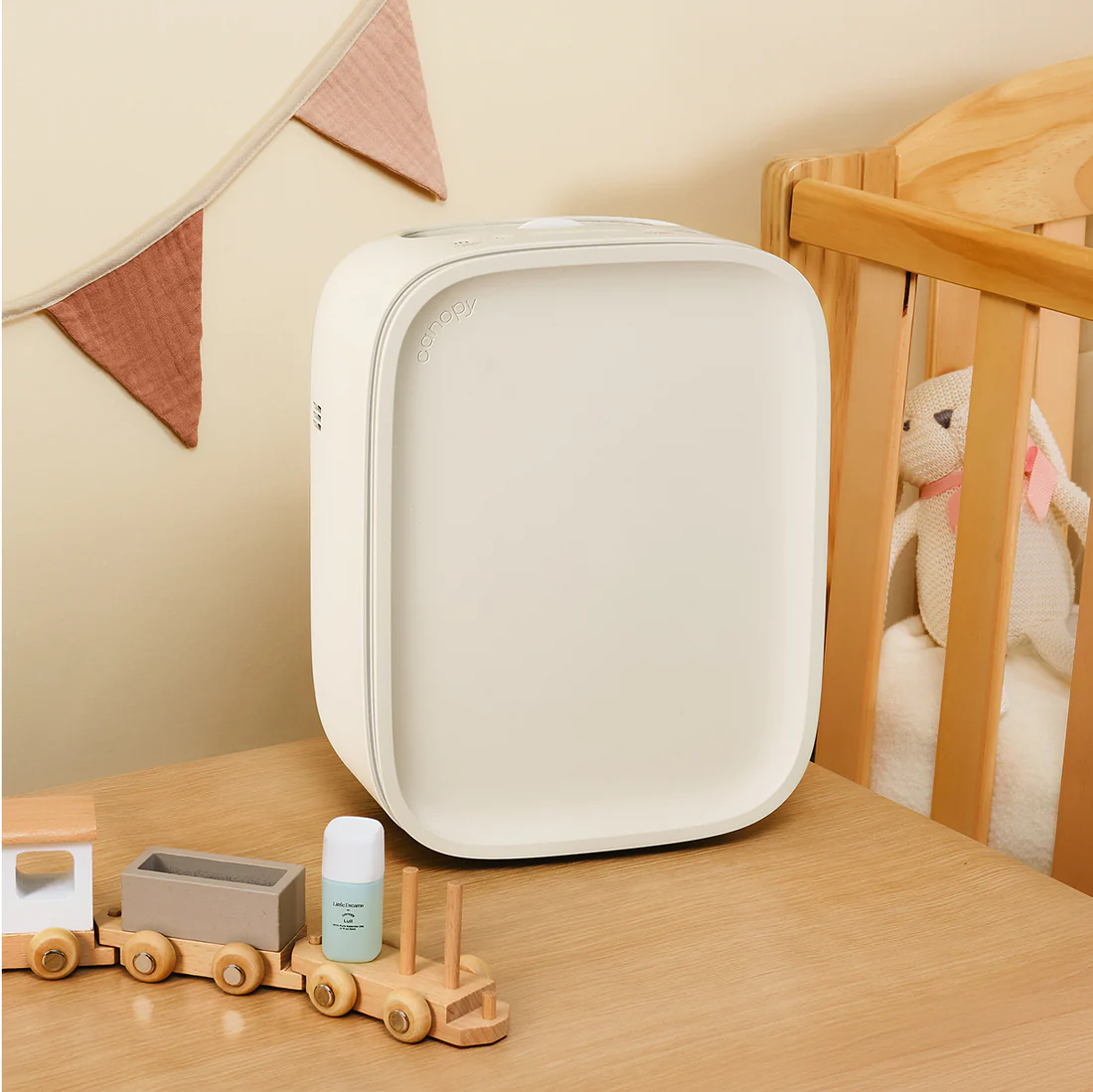
Canopy Nursery Air Purifier
The Canopy Nursery Air Purifier was designed to address all of the above without asking you to compromise on any of it. Canopy’s three-stage filtration system includes a pre-filter for hair and larger particles, a HEPA-13 filter that captures up to 99.97% of airborne particles as small as 0.3 microns*, and an activated carbon layer that addresses heavy smoke, diaper odors, and other strong household smells.
The CADR (a measure of how much filtered air the purifier delivers) comes in at 60 cfm for pollen, 52 cfm for dust, and 45 cfm for smoke, with a PM2.5 sensor that continuously monitors air quality and adjusts fan speed automatically. When pollutant levels drop, it dials back to conserve energy. When conditions worsen, it responds without any input from you.
Built for Baby’s Sleep Schedule
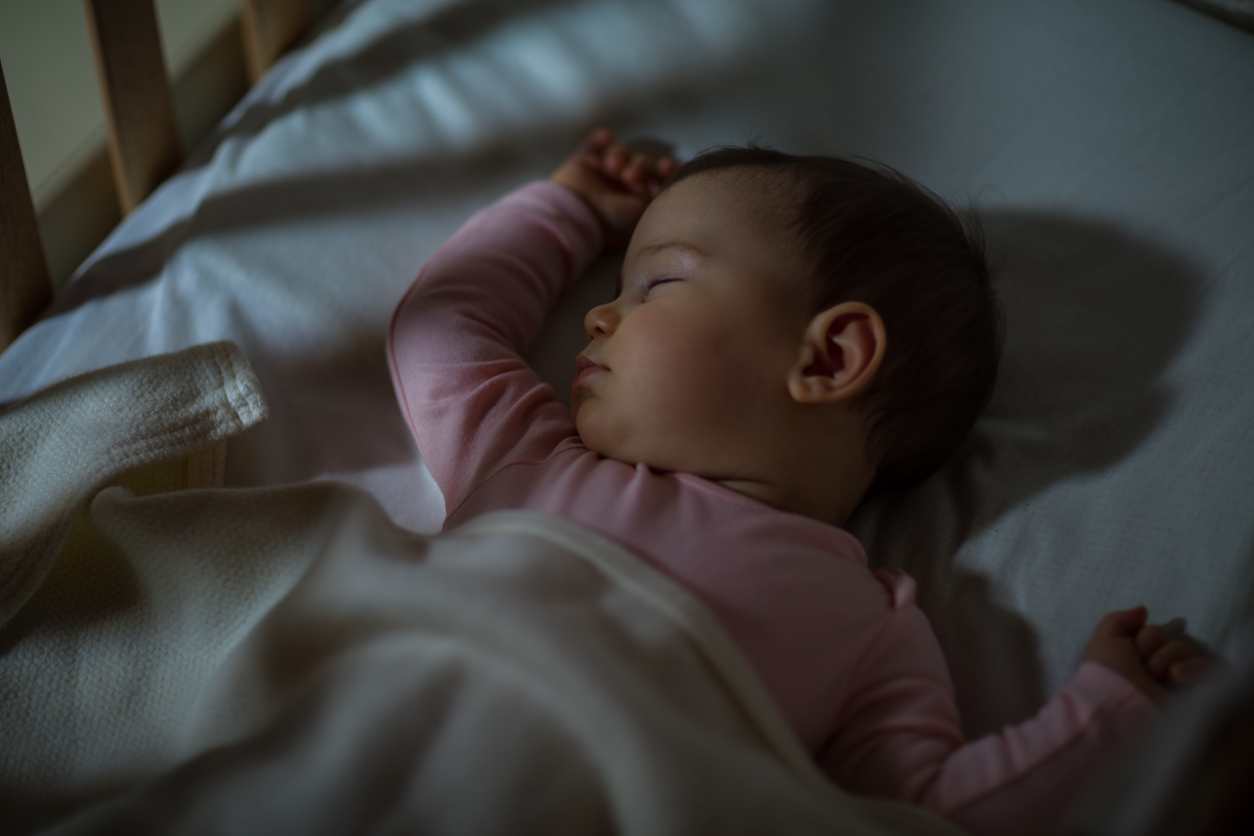
Sleep-Safe Auto Mode sets this purifier apart in a nursery context. Unlike other purifiers whose auto modes push the fan into high gear at 2 AM, the Canopy’s light sensor detects when the room goes dark and holds the fan at a consistent rate. No jarring speed changes or sudden noise to disrupt sleep. It operates at a minimum of 17.5 dB, quiet enough that you’ll barely register it’s on.
A soft optional night light (white or red) provides an ambient glow designed to support a calm sleep environment. There’s no app required, no Bluetooth to configure, and no extra screen time involved in running it.
Aromatherapy Included
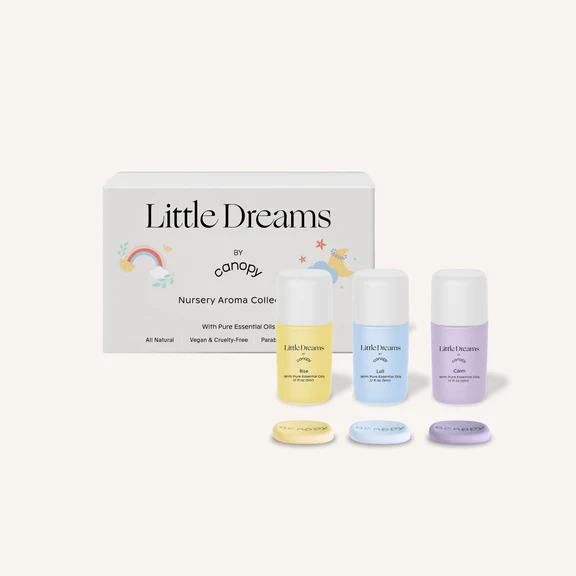
Canopy Little Dreams Aroma Kit
Every Canopy Nursery Air Purifier comes with the Little Dreams Aroma Kit, which allows you to pair gentle scents with the unit’s filtration and diffusion system. It’s a small but considered touch for a room designed around comfort and routine.
Design That Fits the Room
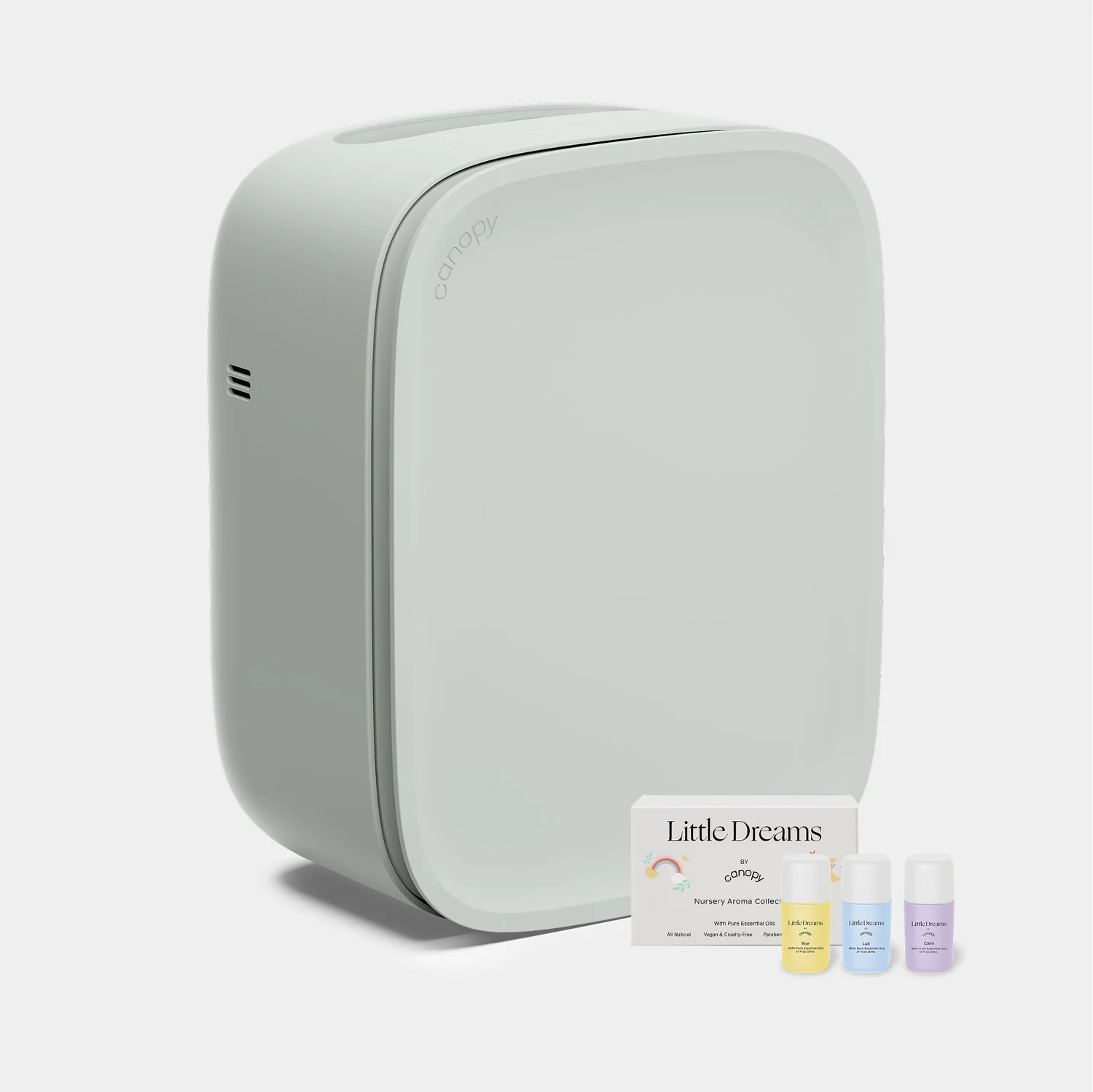
Jade Nursery Air Purifier from Canopy
It’s available in four colors (White, Moonstruck, Cream, and Jade) and stacks directly with the Canopy Nursery Humidifier 2.0. Both fit in a single footprint. A built-in USB-C port handles additional charging needs without adding another plug to the setup. Touch-free filter changes mean you can do a quick swap and the old one drops cleanly into the trash, which is particularly helpful when working around a sleeping baby.
What Parents Are Saying

In an external Consumer Perception Study of 25 parents conducted over 30 days, 90% agreed the air in their child’s space smelled fresher, and 86% said their child appeared to sleep more soundly.¹ Both are exactly the kind of results a sleep-deprived parent is looking for.
“As a pediatrician and mom of two, I recommend air purifiers for happier bedtimes and smoother mornings,” said Gabriella Dauer, MD.
Physician was compensated by Canopy for their medical expertise.
The Purifier Built for the Nursery
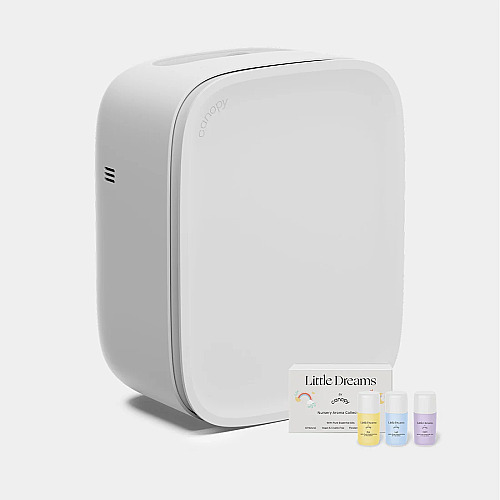
Plenty of brands make air purifiers. Canopy made one specifically for the nursery, then thought through every detail a parent might not get to on their own.
It runs whisper-quiet so that it won’t disturb a sleeping baby, requires no app or Bluetooth setup, and stacks directly with the Nursery Humidifier to keep the room tidy. The three-stage filtration handles odors from fresh paint and diaper changes and outdoor pollutants that drift in through windows and vents.
The Canopy Nursery Air Purifier starts at $199 and is FSA/HSA eligible. A subscription option brings the device price to $179 and delivers replacement filters automatically every six months.
You’ve done the work. The nursery is almost perfect. Almost.
*Tested to ISO 29463 standards
¹ Based on an external Consumer Perception Study of 25 parents, after 30 days. Results may vary.
All details were verified at the time of publication and are subject to change without notice. This article is for informational purposes only and does not constitute medical advice. Consult your healthcare provider with any questions about your child’s health.




Leave a Comment
Your email address will not be published. Required fields are marked *