
I was looking at vitamins for kids recently when a brand stopped me in my tracks. It wasn’t the brightly colored packaging that caught my attention. It was something I’d never noticed before.
First Day didn’t use a single children’s formula. It split the youngest years into two separate products, one for toddlers and one for school-age kids, each with its own nutrient profile.
It seemed so logical. I’d never even thought about it before. “If I wouldn’t take a supplement made for every adult between 18 and 65, why should a children’s vitamin company try to cover toddlers and tweens with the same dose?”
I’ve been researching supplements long enough to have a short list of trusted brands, and Hiya was always near the top. So I pulled both labels and compared them side by side. Here’s what stood out.
Vitamins for Kids: Hiya vs. First Day at a Glance
Before breaking down the details, here’s a quick snapshot of how these two brands compare across the 2–12 age range. The differences start with dosing philosophy and extend all the way to what’s on the label.
Hiya Kids Daily Multivitamin | First Day No Junk™ Multivitamins | |
|---|---|---|
Age Range | One formula: ages 2 to 12 | Two formulas: Toddlers (2–3), Kids (4–12) |
Nutrients per Formula | 15+ | 10 (Toddlers), 9 (Kids) |
Added Sugar | 0g (sweetened with monk fruit extract and mannitol, a sugar alcohol) | 2g per serving (organic cane sugar) |
Form | Chewable tablet | Gummy |
Dosing Approach | Fixed dose | Calibrated to close common nutrient gaps at each stage, without stacking on top of a normal diet |
Price | $30/mo | $39/mo; $23.40/mo on subscription |
Only One Formula vs. One Optimized for Each Stage
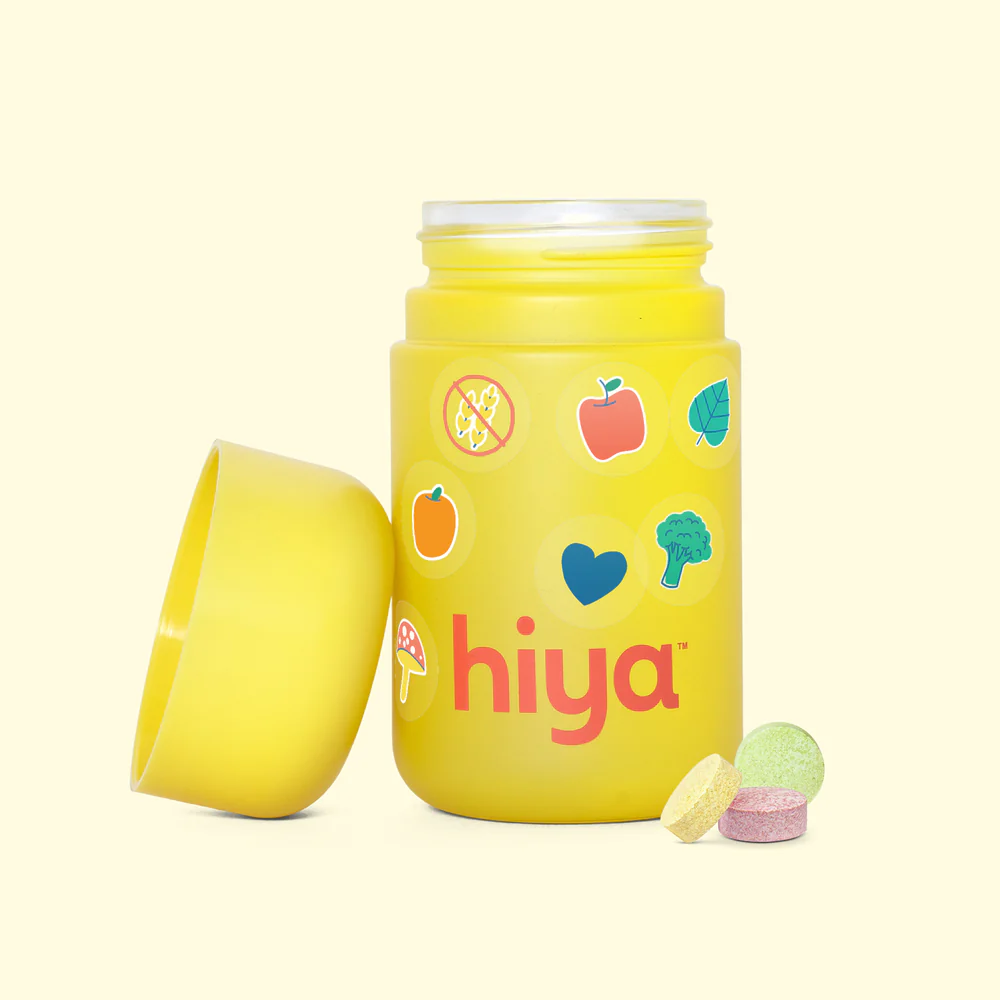
On paper, these two brands share a lot of common ground. Both are non-GMO and third-party tested for purity. First Day is free from the top nine allergens; Hiya is gluten-, dairy-, and nut-free (formula contains coconut oil). Both brands also skip artificial dyes and synthetic folic acid, so on ingredient transparency, it’s a fair draw.
Where they split is in how they think about dosing. The National Academies divide pediatric nutrient needs into four age bands, covering 1–3, 4–8, 9–13, and 14–18, in their published Dietary Reference Intakes, because a toddler’s needs and tolerances look nothing like a preteen’s. First Day builds its formulas around that same logic, with separate products for toddlers (2–3), kids (4–12), and teens (13–17).
Other brands are starting to move in the same direction. Hiya recently launched its own age-specific teen formula, stepping away from the one-dose-fits-all model for the first time. First Day has been doing it from the start. The question is whether that’s enough or if differentiation should start before age 13.
Stage by Stage: What the Labels Show
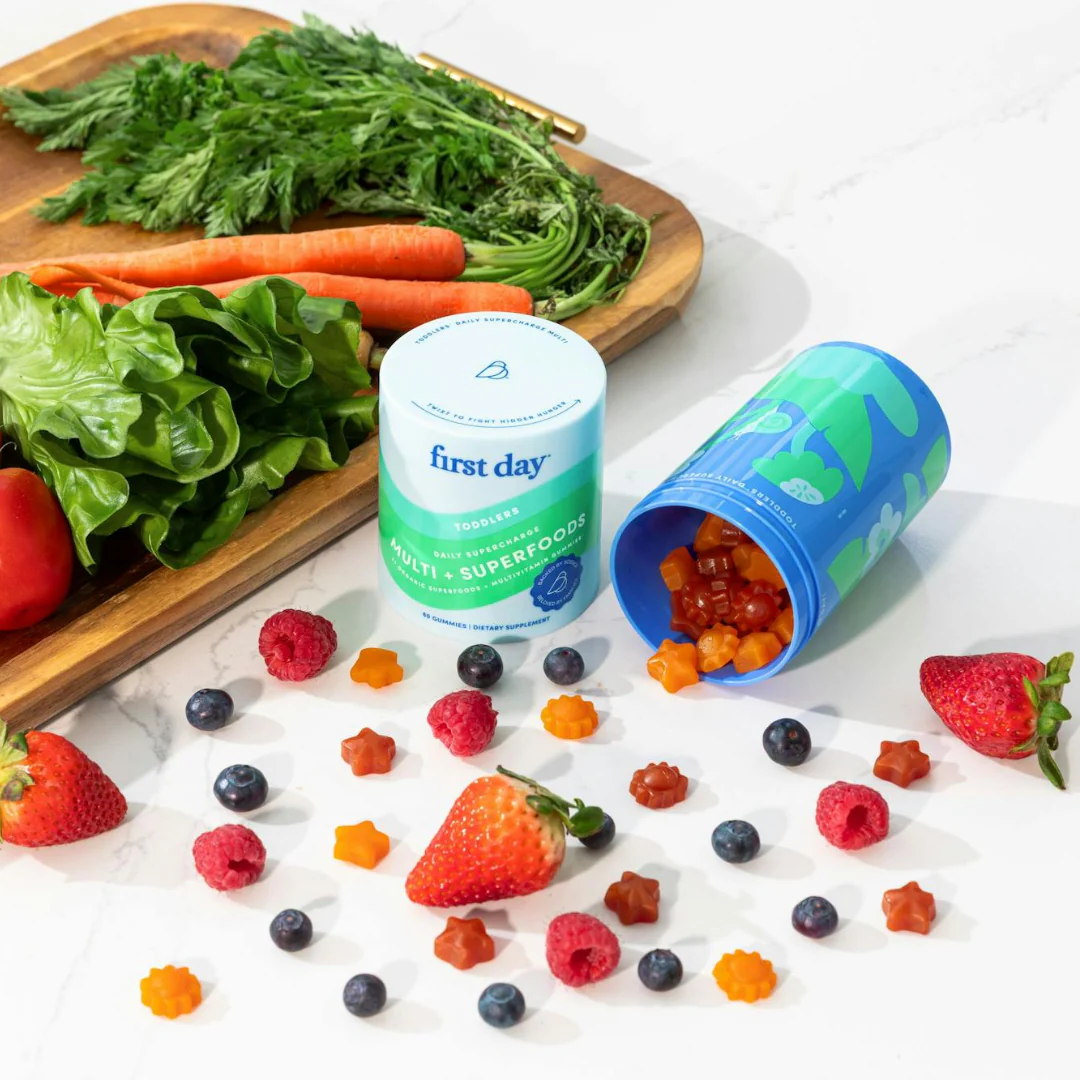
Even well-fed kids can run short on specific nutrients, which is part of why choosing the right vitamins for kids requires more than scanning the label. Researchers call this hidden hunger, a micronutrient gap that shows up even on an otherwise healthy diet.
A 2025 nutrition survey analysis gives this some real shape. For instance, vitamin D and choline came up short across every age group studied, from toddlers through teens. But the specific gaps shift as kids get older. Roughly two in three toddlers fall short on choline, while about one in three kids ages 9 to 14 and one in two older teens miss the mark on folate, a gap that widens rather than stays flat.
The Linus Pauling Institute recommends a multivitamin/mineral supplement providing 100% of the Daily Value for most vitamins and essential minerals for children ages 4 to 13. I compared the same core nutrients across both developmental stages against that standard.
Note: Hiya uses one fixed-dose tablet for every child in the 2–12 range, while First Day adjusts the milligram amounts stage by stage. That difference is what drives the percentages in the tables below.
Toddlers (Ages 2–3)
Hiya % Daily Value | First Day Toddlers’ % Daily Value | |
|---|---|---|
Vitamin A | 120% | 24% |
Vitamin C | 267% | 73% |
Vitamin D3 | 167% | 67% |
Vitamin B1 | 100% | 40% |
Vitamin B2 | 120% | 48% |
Vitamin B6 | Not included | 64% |
Folate | 133% | 25% |
Vitamin B12 | 222% | 89% |
Choline | Not included | 5% |
Vitamin K2 | DV not established | DV not established |
Zinc | 100% | Not included |
Note: K2 works alongside vitamin D3 to help direct calcium to bones, which is why both brands include it even though it has no established Daily Value.
Toddlers have smaller bodies, developing digestive systems, and lower nutrient thresholds. Some get extra nutrients from fortified cereal or milk; others go through weeks of eating almost nothing but a handful of foods, a pattern common enough that picky eating affects an estimated 22% of young children. Either way, a fixed dose built for a much wider age range doesn’t know which toddler it’s talking to.
First Day’s “No Junk”™ Toddlers’ Multi stays at or below 100% of the Daily Value for every nutrient in the table above, leaving room for what toddlers already get from fortified foods and a normal diet.
Hiya delivers 100% of a toddler’s Daily Value for zinc; First Day leaves it out since it’s not a recognized toddler gap. First Day puts its attention on choline instead. It supports early brain development during the first 1,000 days of life, a window overlapping the start of this stage, and the 2025 DGAC flags it as underconsumed in infants and young children.
First Day also adds vitamin B6, which the body uses to make neurotransmitters. Unlike choline, it’s not addressing a documented gap, just a nutrient First Day chooses to include. Hiya’s 2–12 formula doesn’t include B6.
Kids (Ages 4–12)
Hiya % Daily Value | First Day Kids’ % Daily Value | |
|---|---|---|
Vitamin A | 40% | 14% |
Vitamin C | 44% | 22% |
Vitamin D3 | 125% | 50% |
Vitamin B1 | 42% | 25% |
Vitamin B2 | 46% | 26% |
Folate | 50% | 20% |
Vitamin B12 | 83% | 75% |
Vitamin K2 | DV not established | DV not established |
Zinc | 27% | Not included |
Vitamin B6 | Not included | 22% |
School-age kids are growing steadily, but they aren’t yet facing puberty’s spike in nutrient demand. Most get some zinc and B vitamins from dairy, meat, and fortified grains, though the federal nutrition data cited earlier still shows real gaps at this age for vitamin D and folate.
Hiya’s vitamin D3 still exceeds 100% at this stage. First Day’s “No Junk”™ Kids’ Multi stays below the 100% ceiling here, too. Folate and B12 percentages look lower than the Toddlers’ formula (25% to 20% and 89% to 75%), but the actual amounts increase; the drop is just the reference value climbing faster than the dose does at this age.
Hiya delivers 27% of a school-age child’s Daily Value for zinc; First Day leaves it out at this stage, too, the same call it makes for toddlers. Both brands include vitamin K2, though it still lacks an established Daily Value.
Which Kids’ Vitamin Fits Your Family?
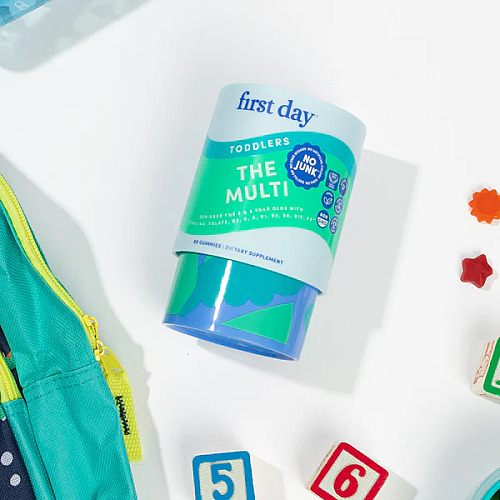
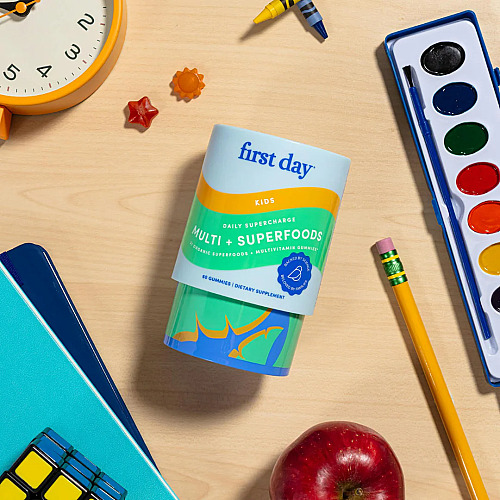
Hiya is a solid option if your kids are close in age and you value a streamlined, sugar-free routine. It also covers a handful of nutrients First Day doesn’t, including vitamin E, iodine, selenium, manganese, biotin, and pantothenic acid.
But if you choose your own supplement based on what your body needs right now, First Day applies that same logic to vitamins for kids. Each formula is calibrated to close the specific hidden-hunger gaps common at that stage, without stacking more on top of what a normal diet already provides. And when they hit their teens, First Day has a formula for that stage, too.
On subscription, First Day runs about $23.40 per month, compared to Hiya’s $30. Subscribers also get free shipping on their first order.
This content is for informational purposes only and is not medical advice. Consult your child’s pediatrician before starting any supplement. All product details, pricing, and availability were verified at the time of publication and are subject to change without notice.







Leave a Comment
Your email address will not be published. Required fields are marked *