
You’re exhausted by 2 PM, even after a full night’s sleep. The weight you’ve been trying to lose won’t budge, no matter what you try. Your brain feels foggy during meetings, and your workouts leave you feeling drained instead of energized.
So you do the responsible thing and schedule your annual physical. Your doctor runs the standard blood work, reviews your results, and delivers the verdict: Everything looks normal. But you don’t feel normal at all.
If this sounds familiar, you’re not alone. Thousands of health-conscious adults experience this exact frustration every year. What matters most is that your doctor didn’t miss anything.
What Your Annual Physical Is Designed to Do

Let’s clear up a common misconception right away. Your annual physical isn’t falling short. It’s fulfilling its precise medical purpose of disease screening.
Standard annual physicals usually include a complete blood count (CBC), comprehensive metabolic panel (CMP), and lipid panel designed to detect medical conditions that require treatment. These tests excel at identifying things like diabetes, kidney disease, liver problems, and cardiovascular risk factors that have crossed into the clinical range.
This approach serves an important function in preventive medicine. When these markers move outside normal ranges, they signal conditions that need medical intervention. Your doctor is looking for red flags that indicate disease, and if those flags aren’t present, your results come back “normal.”
What Standard Testing Doesn’t Measure

While your annual physical screens for disease, it typically doesn’t evaluate markers related to functional performance and optimization. The symptoms you’re experiencing often connect to biomarkers that standard panels don’t include:
Comprehensive hormone panels: Testosterone, estrogen, progesterone, DHEA, and thyroid markers beyond basic thyroid-stimulating hormone
Insulin and metabolic markers: Fasting insulin, HbA1c trends, and insulin sensitivity indicators
Advanced cardiovascular markers: ApoB, Lp(a), and inflammatory markers like high-sensitivity C-reactive protein
Micronutrient status: Vitamin D, B12, folate, magnesium, and other essential nutrients
Studies link insulin resistance with cognitive decline, vitamin D deficiency with fatigue, and inflammatory markers with overall vitality. Generally, these markers aren’t included in disease screening because they’re focused on optimization rather than diagnosis.
Why “Normal” Doesn’t Always Mean “Optimal”
The “normal range” on your lab report represents the middle 95% of the population tested. This approach works well for identifying disease, but there’s a substantial difference between avoiding disease and optimizing performance.
Biomarker | Standard “Normal” Range | Why Broad Ranges Matter |
|---|---|---|
Testosterone (Male) | 300–1,000 ng/dL | 350 ng/dL is “normal” but feels very different than 800 ng/dL for energy and recovery |
Vitamin D | 30–100 ng/mL | 32 ng/mL won’t trigger medical concern but may be too low for optimal immune function |
Fasting Insulin | 2–25 μIU/mL | 15 μIU/mL is “normal” but may indicate insulin resistance affecting body composition |
Let’s look at testosterone specifically. Research shows testosterone levels have declined approximately 25% among young men ages 15–40 over a 17-year period. A 30-year-old man with 350 ng/dL is technically “normal,” but that’s a very different physiological state than 800 ng/dL when considering energy, muscle mass, and recovery.
This gap between “normal” and “optimal” is where many people find themselves stuck. Standard testing confirms there’s no disease present, but it doesn’t address the functional markers that influence daily energy, mental clarity, body composition, and overall vitality. Closing this gap requires a different approach.
How Guided Optimization® Works
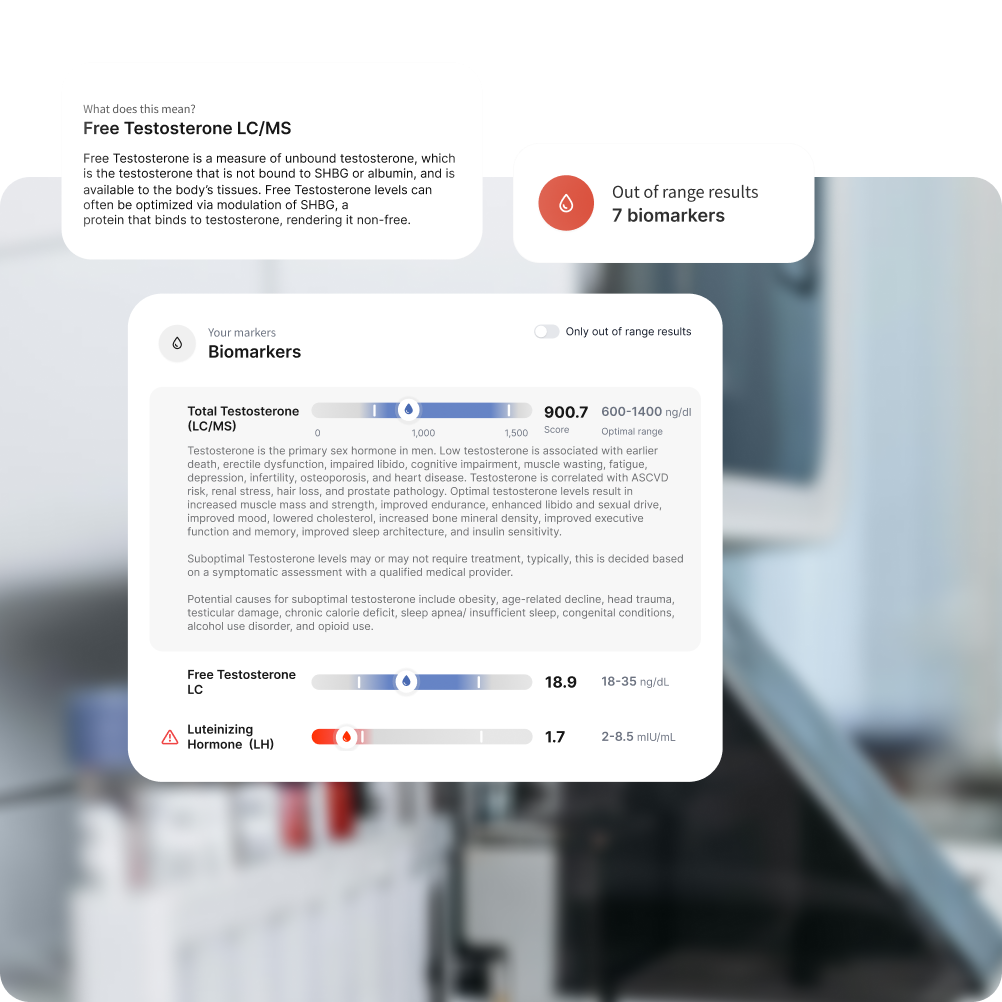
Marek Health is a telehealth platform specializing in evidence-based health optimization through comprehensive diagnostic testing, personalized health coaching, and licensed medical provider oversight. Their Guided Optimization® program is built around comprehensive testing and ongoing support. Instead of asking whether a disease is present, the approach asks what’s happening at a functional level.
The Initial Process:
Intake assessment with an expert Marek Health Coach who reviews your symptoms, health history, and specific goals
Custom lab panel designed based on your individual symptoms and objectives (analyzing 100+ biomarkers, with lab panels starting at $450)
Blood draw at a convenient Quest Diagnostics location
Results typically delivered within 14 business days
Custom lab analysis report (30–50 pages), breaking down your biomarker patterns in detail
Consultation with a licensed medical provider to review your results and discuss your personalized treatment plan
Treatments delivered to your door from FDA-approved pharmacies and supplement dispensaries
Ongoing Support:
This isn’t a one-time test. You work with a dedicated health coach and licensed medical provider who adjust your protocol as your biomarkers change. Monthly check-ins keep you on track. Treatment refills and follow-up lab work happen as needed. The protocols evolve based on your data, not a cookie-cutter approach.*
There are no long-term commitments or subscriptions. The model is flexible and adapts as your goals change.
The Bottom Line

Your annual physical remains essential for disease screening and should continue. Comprehensive testing supplements this by evaluating markers related to how you feel day to day. When standard testing says you’re fine but something feels off, the markers affecting your daily experience often weren’t part of the equation.
If you’re experiencing persistent symptoms despite normal results, Marek Health’s Guided Optimization® provides the comprehensive analysis and ongoing support to help you move from “normal” to optimal.*
Marek Health has been reviewed by Muscle and Brawn and maintains a strong rating on Trustpilot with over 790 customer reviews. The average client investment is approximately $300 per month, though costs vary based on individual testing needs and treatment plans. As a healthcare service, Marek Health does not offer refunds, but there are no long-term commitments or subscription requirements.
Ready to understand what your biomarkers are really telling you?
*These statements have not been evaluated by the Food and Drug Administration. This service is not intended to diagnose, treat, cure, or prevent any disease. Results may vary. Consult with a healthcare provider before making any changes to your health regimen.







Leave a Comment
Your email address will not be published. Required fields are marked *